
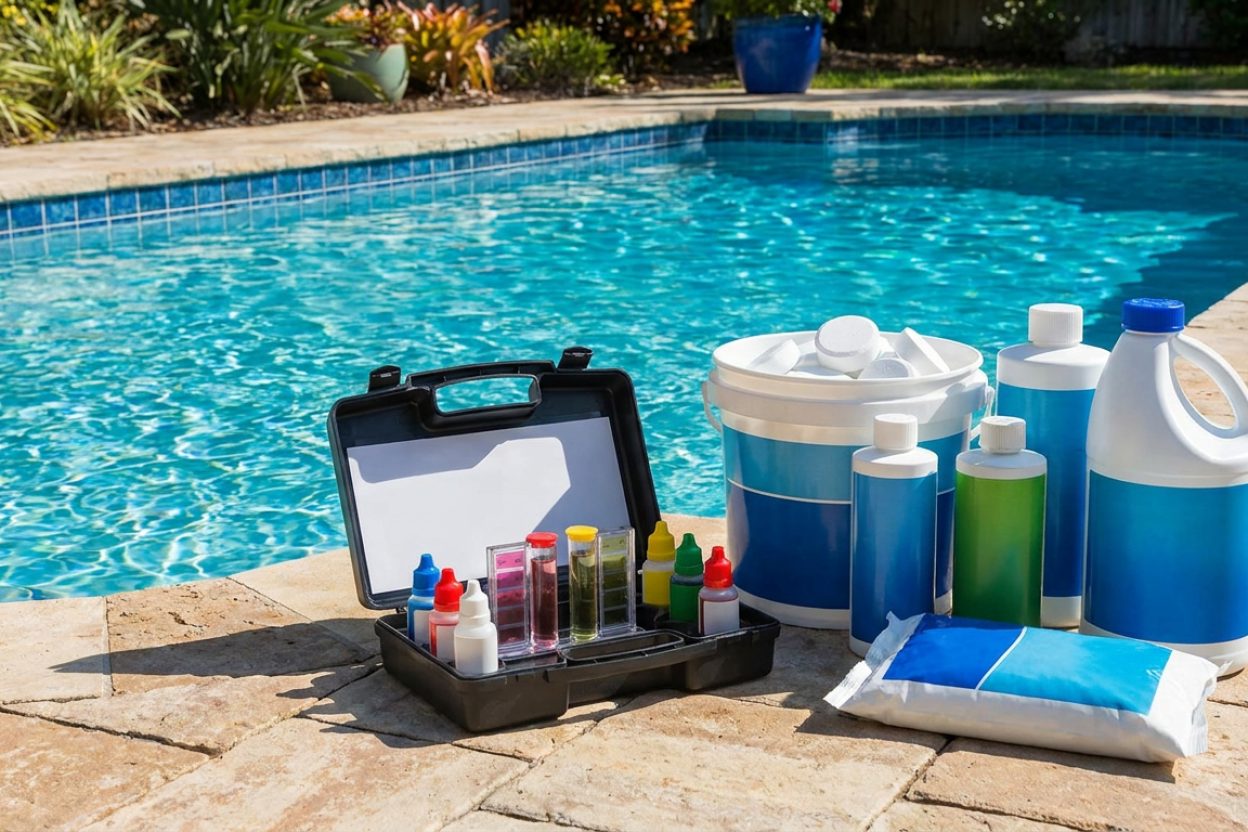
How Long Between Pool Chemicals - Safe Timing Guide

How long should I wait between adding different pool chemicals?
Read full question
Walked out to check my pool chemistry and my test strips are showing 3.5 ppm chlorine, but every guide says it should drop to zero before adding more chemicals. The pool store gave me a bunch of different chemicals - chlorine, pH increaser, pH decreaser, algaecide, etc. - but I'm not sure about the timing.
How long do I need to wait between adding different chemicals? Can I just dump them all in at once to get my water balanced faster, or do I need to space them out? I don't want to mess anything up or create some kind of dangerous reaction in my pool.
Quick Answer
Wait about 30 minutes between most pool chemical additions (long enough to circulate), with pH-lowering (acid) needing about 30 minutes and pH-raising (soda ash) needing several hours before retesting. Some chemicals like chlorine and acid should never be mixed directly.
One myth worth clearing up first: you do NOT need to wait for chlorine to drop to zero before adding other chemicals. The "let chlorine drop" rule is about when it's safe to swim after shocking, not a precondition for balancing pH or alkalinity. As long as your chlorine is in a normal range, you can adjust your water now.
Understanding Chemical Interaction Times
Pool water chemistry is a delicate balance that requires patience and proper timing. When you add chemicals to your pool, they need time to circulate, dissolve completely, and reach equilibrium before you can accurately assess their impact or safely add additional chemicals.
The circulation system plays a crucial role in this process. Your pump should run for at least one complete turnover cycle (varies based on your pump size and pool volume - check manufacturer specifications) after adding any chemical to ensure proper distribution throughout the entire water volume.
Specific Timing Guidelines by Chemical Type
Chlorine Adjustments
When adding liquid chlorine or granular chlorine, wait about 30 minutes with the pump running before adding any other chemical. If you're performing a SLAMShock Level And Maintain — raise free chlorine to a target based on your CYA and hold it there until the algae is gone. It's a process, not a one-time dose. the SLAM walkthrough → process for algae treatment, you can add chlorine more frequently - every 30-60 minutes - but only chlorine during this process.
Never combine chlorine and muriatic acid in the same container, the same undiluted spot, or back-to-back in one place — mixing them concentrated can release toxic chlorine gas. Added separately to circulating pool water and spaced apart, they are fine.
pH Adjustments
pH adjustments require the longest waiting periods. After adding muriatic acid or sodium bisulfate to lower pH, wait about 30 minutes with the pump running before retesting. The acid disperses quickly, but testing too soon can give a false reading.
When raising pH with sodium carbonate (soda ash), wait at least 2 hours before retesting, as the chemical continues to dissolve and affect pH levels gradually.
Alkalinity Adjustments
Total alkalinity adjustments using sodium bicarbonate (baking soda) or alkalinity increaser require 4-6 hours of circulation before retesting. These chemicals dissolve slowly and continue affecting water chemistry well after initial addition.
Add alkalinity adjusters to the deep end with the pump running, and distribute the chemical across the water surface rather than dumping it in one spot.
Calcium Hardness and Stabilizer
Calcium chloride is very soluble and dissolves quickly, usually distributing within a few hours with the pump running. Test calcium hardness the following day after addition.
Cyanuric acid (stabilizer) requires even longer - 24-48 hours for complete dissolution. This chemical is particularly slow to dissolve and should be distributed in a sock in front of a return jet. Secure the sock properly to prevent it from blocking circulation or being sucked into the system.
Safe Chemical Addition Sequence
When multiple chemical adjustments are needed, follow this priority order with proper timing intervals:
- First: Address any sanitizer demand or algae issues with chlorine (SLAM if necessary)
- Second: Adjust total alkalinity if outside the 80-120 ppm range (wait 4-6 hours)
- Third: Adjust pH to 7.4-7.6 range (wait ~30 min after acid, or several hours after soda ash, before retesting)
- Fourth: Adjust calcium hardness if needed (wait a few hours)
- Last: Add stabilizer if CYACyanuric Acid (stabilizer) — Sunscreen for your chlorine — it keeps sunlight from burning it off. The catch: the more you have, the more chlorine you need to keep. learn more → is below target levels (wait 24-48 hours)
Testing and Retesting Schedule
Proper timing isn't just about chemical additions - it's also about when to test your water. Test your pool water at least 2-3 times per week during swimming season, and always wait the appropriate time after chemical additions before retesting.
Use a quality test kit like the Taylor K-2006 for accurate readings. Test strips are convenient but less reliable for precise chemical balancing.
After any chemical addition, retest only the specific parameter you adjusted, and only after the appropriate waiting period. Testing too soon wastes reagents and gives misleading results.
Emergency Situations and Exceptions
During algae treatment using the SLAM method, normal timing rules change. You'll add liquid chlorine every 30-60 minutes to maintain shock level FCFree Chlorine — The chlorine actively sanitizing your water right now. This is the number you keep an eye on. how much you need → based on your CYA level, continuing until combined chlorine (CCCombined Chlorine — "Used-up" chlorine left over from doing its job. Above about 0.5 ppm is the classic sign water needs a shock. learn more →) drops to 0.5 ppm or less and you pass the overnight chlorine loss test (OCLT).
For green or black algae, focus solely on chlorine addition until the water clears. Don't attempt to balance other parameters during active SLAM treatment.
Safety Reminders
Never mix chemicals in containers or add multiple chemicals to the same area simultaneously. Always add chemicals to different areas of the pool with the pump running. Store chemicals in a cool, dry place away from each other and never in the same container.
Keep detailed records of what chemicals you add and when. This helps you track patterns and avoid over-treatment or dangerous combinations.
For the full breakdown of safe chlorine levels by CYA level, see our pool water chemistry guide.
 Taylor K-2006C Complete FAS-DPD Pool & Spa Test Kit
The FAS-DPD kit pool pros trust — reads chlorine accurately even at shock/SLAM levels, plus pH, alkalinity, calcium hardness and CYA. View on Amazon →
Taylor K-2006C Complete FAS-DPD Pool & Spa Test Kit
The FAS-DPD kit pool pros trust — reads chlorine accurately even at shock/SLAM levels, plus pH, alkalinity, calcium hardness and CYA. View on Amazon →
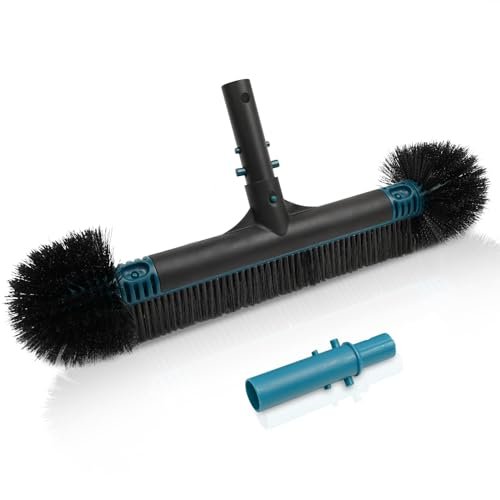 Poolvio 20" 2-in-1 Pool Brush Head (Walls & Floor)
Sturdy 20-inch brush head that clips onto any standard telescopic pole. View on Amazon →
Poolvio 20" 2-in-1 Pool Brush Head (Walls & Floor)
Sturdy 20-inch brush head that clips onto any standard telescopic pole. View on Amazon →
Still need help? Ask a Pool & Spa Expert AD
Get a personalized answer from PoolGuy810 — 30 years owning a pool and spa repair company. Describe your issue and get step-by-step help.
Related Pool Guides
Need More Help?
Try our free pool calculators and tools to help diagnose and fix your pool problems.
Browse Pool ToolsSLAM calculator, pH calculator, salt dosing & more