
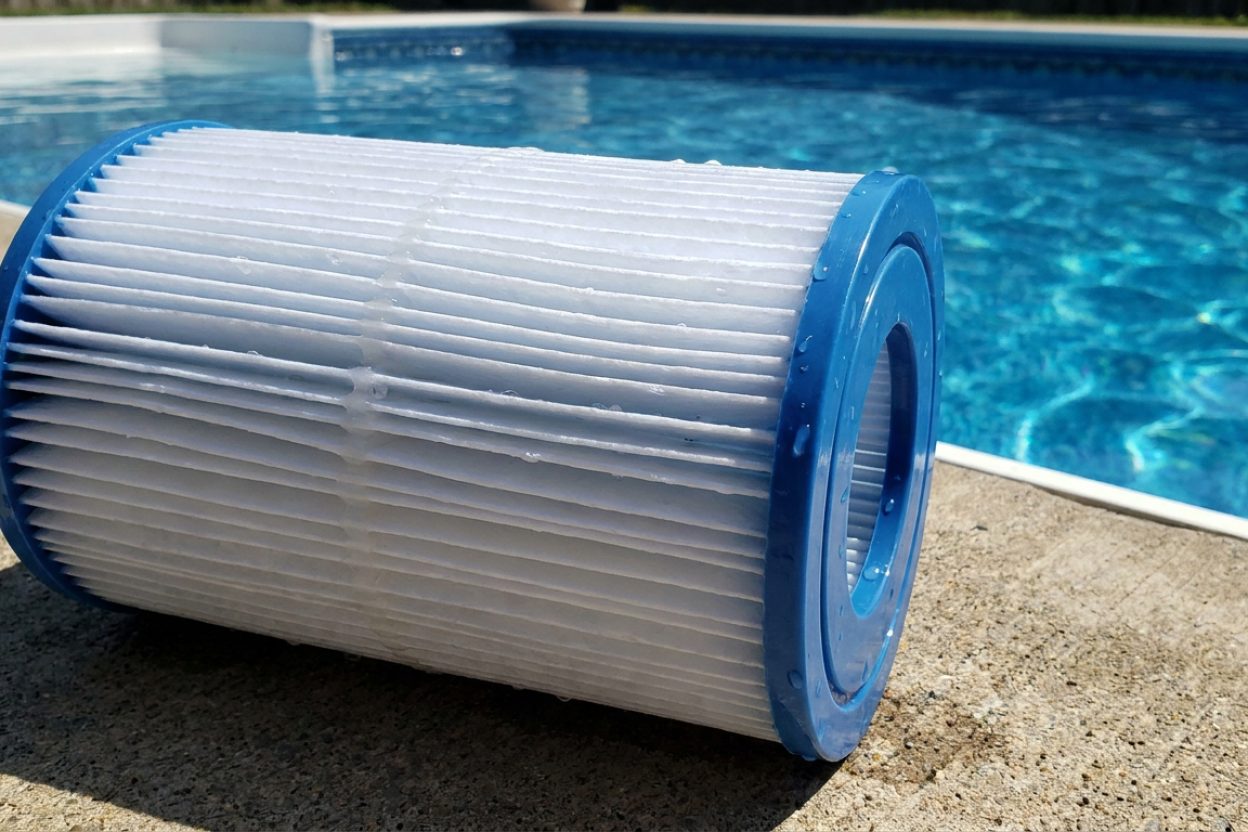
How DE Pool Filter Works: Complete Diagram & Guide

How does a DE filter actually clean pool water for safe swimming?
Read full question
Pulled out my DE filter for spring opening and once again I'm staring at this diatomaceous earth powder wondering how it actually works to clean my pool. I want to make sure I understand what's happening inside the filter tank and how small of particles it can actually remove. Is it really better than other filter types for keeping harmful bacteria and debris out of the pool?
I keep hearing that DE filters are the best for water quality, but I don't really understand the process of how they actually remove contaminants. I want to make sure my kids are swimming in the cleanest possible water.
Quick Answer
A DE pool filter works by coating filter grids with diatomaceous earth powder, which traps particles as small as 2-5 microns as water flows through the tank. The DE creates an ultra-fine filtering layer that provides the cleanest pool water of any filter type.
How DE Pool Filters Work
What if your pool could trap incredibly fine debris—down to just a few microns—all thanks to tiny fossilized algae from millions of years ago. (One important caveat: no filter removes bacteria, which are smaller than one micron — it's chlorine or another sanitizer that actually kills bacteria and keeps the water safe to swim in.)? Understanding how your DE filter works will help you maintain crystal-clear water and troubleshoot any issues that arise.
The Basic DE Filter Components
A DE filter consists of several key components working together:
- Filter tank: The main housing that contains all internal components
- Filter grids: Fabric-covered frames that hold the DE powder
- Manifold assembly: Central tube that connects all grids and directs clean water back to the pool
- Air relief valve: Releases trapped air during operation
- Drain plug: Allows complete water drainage for maintenance
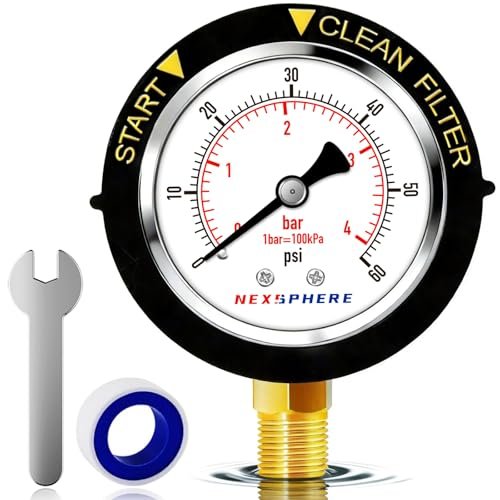
- Pressure gauge: Monitors filter pressure for cleaning cycles
Step-by-Step Filtration Process
Here's exactly how water moves through your DE filter system:
- Water intake: Dirty pool water enters the filter tank through the inlet pipe at high pressure from your pool pump
- Grid coating: Water flows around filter grids that are pre-coated with diatomaceous earth powder
- Filtration: As water passes through the DE-coated grids, microscopic particles, dirt, and debris get trapped in the DE layer
- Clean water collection: Filtered water passes through the fabric grid material into the hollow interior of each grid
- Manifold gathering: Clean water flows from inside the grids into the central manifold assembly
- Return to pool: The manifold directs clean, filtered water back to your pool through the return lines
The Science Behind DE Filtration
Diatomaceous earth is made from fossilized diatoms (microscopic algae) that create an incredibly fine filtering medium. When you add DE powder to your skimmer, it coats the filter grids with millions of tiny particles that have microscopic pores and sharp edges.
This creates a filter cake that traps particles much smaller than the grid fabric itself could catch. As the DE cake captures debris, it becomes denser and can trap even finer particles over time (though this also raises filter pressure).
Pressure and Flow Dynamics
Your DE filter operates under specific pressure conditions that are crucial for proper function:
- Clean filter pressure: Typically 8-12 PSI when freshly backwashed and recharged
- Operating pressure: Gradually increases as the DE cake traps more debris
- Backwash pressure: When pressure rises 8-10 PSI above clean pressure, it's time to backwash
- Flow rate: Proper turnover requires adequate flow - typically about 1.5-2 GPM per square foot of filter area (check your filter's rating plate)
DE Filter Cycle Operations
Your DE filter goes through several operational phases:
Normal Filtration Mode
During normal operation, your multiport valve is set to "Filter" and water continuously circulates through the DE-coated grids. The pressure gradually builds as debris accumulates in the DE cake.
Backwash Mode
When pressure becomes too high, you switch to "Backwash" mode. This reverses water flow, lifting the dirty DE off the grids and flushing it to waste. You'll see dirty water flowing out initially, then cleaner water as the DE is removed.
Rinse Mode
After backwashing, a brief rinse cycle removes any remaining loose DE particles before returning to normal filtration.
Recharging with Fresh DE
After backwashing, you must add fresh DE powder to recoat the grids:
- Standard dosage: 1 pound of DE per 10 square feet of filter area
- Application method: Mix DE with water in a bucket and pour slowly into the skimmer while pump runs
- Distribution time: Allow 2-3 minutes for DE to evenly coat all grids before normal operation
Advantages of DE Filtration
DE filters provide superior water quality compared to sand or cartridge filters. Keep in mind that filtration and sanitation are two different jobs: DE gives the clearest water of the three filter types, but it's your chlorine — not the filter — that kills bacteria and keeps the water safe for swimmers.
Key advantages include:
- Removes particles as small as 2-5 microns (sand filters only catch 20-40 microns)
- Produces the clearest, most sparkling water possible
- Excellent for pools that experience heavy bather loads
- Effective at removing algae and fine debris that other filters miss
- Long service life when properly maintained
Maintenance Requirements
To keep your DE filter working optimally:
- Monitor pressure: Check gauge weekly and backwash when pressure rises 8-10 PSI
- Annual teardown: Disassemble filter yearly to clean grids thoroughly and inspect for damage
- Grid replacement: Replace damaged or worn grids immediately to prevent DE bypass
- Proper DE storage: Keep DE powder in a dry location to prevent clumping
Safety Note: Always wear a dust mask when handling DE powder, as the fine particles can irritate respiratory systems.
Still need help? Ask a Pool & Spa Expert AD
Get a personalized answer from PoolGuy810 — 30 years owning a pool and spa repair company. Describe your issue and get step-by-step help.
Related Pool Guides
Need More Help?
Try our free pool calculators and tools to help diagnose and fix your pool problems.
Browse Pool ToolsSLAM calculator, pH calculator, salt dosing & more