
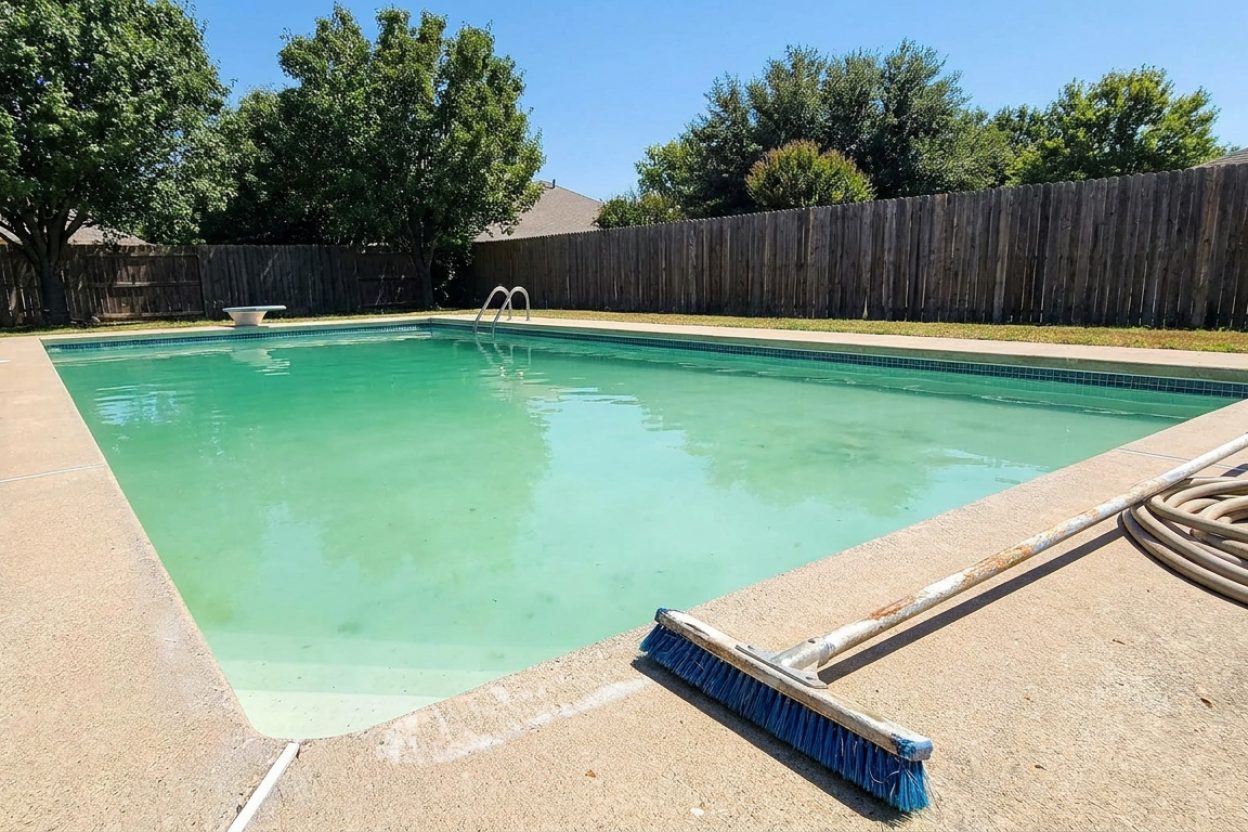
Can You Close a Green Pool? Complete Winter Closing Guide

Is it safe to close my green pool for winter with kids around?
Read full question
Our backyard pool is completely covered in thick green algae right now, but with winter coming and two young kids who love swimming, I'm not sure what to do.
I've heard that leaving algae over winter can make things worse, but I'm also concerned about using harsh chemicals with the kids playing nearby. What's the safest approach for families? Should I treat the algae before closing, or are there other winterizing options that won't create bigger problems come spring when the kids want to swim again?
Quick Answer
You can close a green pool, but it's not recommended as algae will worsen over winter. Either treat the algae with SLAM method before closing, or use extra winterizing chemicals and accept potential spring cleanup issues.
Why Closing a Green Pool Is Problematic
Algae doesn't simply go dormant during winter—it continues to grow and multiply even in cold water, albeit more slowly. When you close a green pool without proper treatment, several problems compound over the winter months:
- Algae blooms will intensify and the water will become more contaminated and harder to clear
- Dead organic matter will accumulate on pool surfaces and in equipment
- pH levels will drop significantly as algae decomposes
- Metal staining may occur from decomposing algae and unbalanced water
- Equipment damage from prolonged exposure to contaminated water
- Potential liner or surface damage from aggressive spring treatments needed
Option 1: Treat Before Closing
The best approach is performing a SLAMShock Level And Maintain — raise free chlorine to a target based on your CYA and hold it there until the algae is gone. It's a process, not a one-time dose. the SLAM walkthrough → (Shock Level And Maintain) treatment before winterizing. This process typically takes 3-7 days but ensures a clean opening:
- Test water chemistry using an accurate test kit (such as Taylor K-2006), measuring FCFree Chlorine — The chlorine actively sanitizing your water right now. This is the number you keep an eye on. how much you need →, pH, CYACyanuric Acid (stabilizer) — Sunscreen for your chlorine — it keeps sunlight from burning it off. The catch: the more you have, the more chlorine you need to keep. learn more →, and TATotal Alkalinity — The buffer that keeps your pH from bouncing around. Get this in range and pH gets a lot easier to manage. learn more →
- Balance pH first to 7.4-7.6 using muriatic acid if needed
- Determine shock level based on your CYA reading using the all-in-one pool calculator (SLAM FC is roughly 40% of your CYA reading—about 12 ppm FC at 30 CYA, 16 ppm at 40, 20 ppm at 50, and 24-31 ppm at 60-80 CYA; the much lower 4-8 ppm range is for normal maintenance, not for clearing algae)
- Add liquid chlorine to reach shock level—expect to use 3-5 gallons per 10,000 gallons of water initially
- Run pump continuously during SLAM treatment, backwashing or cleaning filter every 12-24 hours
- Maintain shock level by testing and adding chlorine every 12 hours until overnight FC loss is 1 ppm or less
- Brush pool surfaces twice daily to dislodge algae, paying attention to corners and steps
- Vacuum waste rather than filtering dead algae back into the pool (requires sand or DE filter with multiport valve - cartridge-filter users have no waste port, so vacuum slowly on the normal filter setting and clean or replace the cartridge afterward)
- Test for completion when water is crystal clear, combined chlorine (CCCombined Chlorine — "Used-up" chlorine left over from doing its job. Above about 0.5 ppm is the classic sign water needs a shock. learn more →) is 0.5 ppm or less, and the pool passes the overnight chlorine loss test
- Balance final chemistry before beginning normal winterizing procedures
Option 2: Emergency Green Pool Closing
If you absolutely must close a green pool without treatment, follow these damage-minimization steps:
Pre-Closing Preparation
- Remove large debris manually—don't run automated cleaners in green water
- Add a winterizing algaecide—dose strictly per the label, and do NOT overdose copper-based products, which raises the risk of metal staining over winter (a polyquat algaecide avoids that)
- Shock heavily with 3-4 lbs of calcium hypochlorite per 10,000 gallons
- Add winterizing chemicals at 150% of recommended dosage
- Lower water level more than usual (6-8 inches below skimmer) to account for potential staining - ensure all exposed plumbing is properly drained and protected with antifreeze
Equipment Protection
- Drain all equipment thoroughly—contaminated water is more likely to damage pipes and fittings
- Remove pump basket and skimmer baskets for thorough cleaning
- Add extra pool antifreeze to all lines—use 25% more than normal to account for longer pipe runs exposed by lower water level
- Consider removing expensive equipment like salt cells, heater elements, or automation systems
Cover Installation
- Use a solid cover (solid safety or solid winter cover) that blocks all sunlight; avoid a mesh safety cover, which lets UV light through and feeds algae
- Ensure complete coverage to prevent photosynthesis from worsening algae growth
- Consider using cover clips at closer spacing than manufacturer minimum recommendations for extra security (consult cover manufacturer specifications)
Spring Opening Expectations
If you closed a green pool, prepare for intensive spring treatment:
- Budget for 5-10 gallons of liquid chlorine initially
- Plan for multiple filter cleanings or replacements
- Expect 1-2 weeks of SLAM treatment minimum
- Consider professional equipment cleaning or replacement
- Budget for potential surface cleaning or acid washing
Cost Considerations
Treating before closing costs approximately $50-100 in chemicals and time investment. Closing green and dealing with consequences typically costs $200-500 in spring chemicals, equipment repairs, and potential professional services. The math strongly favors treating first.
Prevention for Next Season
To avoid this situation in future seasons:
- Begin closing preparations while water is still clear
- Maintain proper sanitizer levels through late season
- Address algae problems immediately when they appear
- Test CYA levels mid-season to ensure proper chlorine effectiveness
- Keep backup liquid chlorine on hand for emergency treatments
Child Safety During Treatment
When treating a green pool with children present:
- Store all chemicals in locked, child-proof containers away from pool area
- Restrict pool access during SLAM treatment - install temporary fencing if needed
- Never allow children near the pool during chemical addition
- Wait at least 4 hours after adding chemicals before allowing any pool area access
- Keep emergency contact numbers readily available
- Ensure adult supervision at all times during treatment process
When Professional Help Is Needed
Contact a pool professional if: your CYA levels exceed 100 ppm, you're dealing with black algae spots, equipment appears damaged, or you're uncomfortable handling large quantities of chemicals. Some situations require partial drain and refill before any treatment is effective.
For the full breakdown of safe chlorine levels by CYA level, see our pool water chemistry guide.
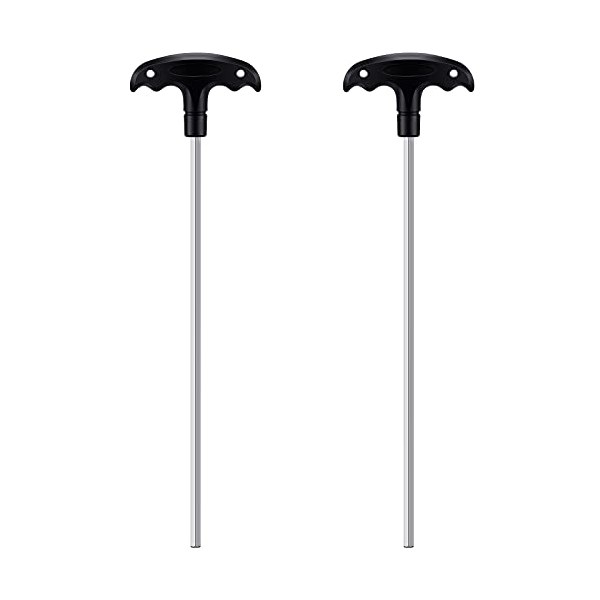 Pool Safety Cover Hex Key Tool (2-Pack)
Hex keys to install or remove a pool safety cover. View on Amazon →
Pool Safety Cover Hex Key Tool (2-Pack)
Hex keys to install or remove a pool safety cover. View on Amazon →
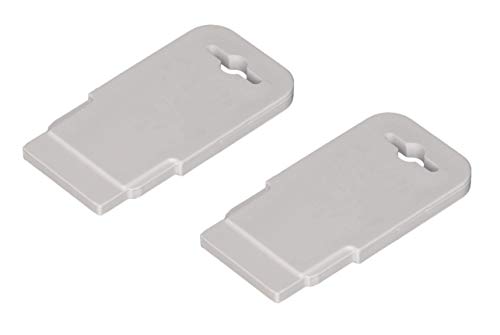 Pool Eyeball / Return Jet Fitting Removal Tool (ATIE)
Pops out & reseats Hayward SP1419 return-jet eyeballs — handy for closing. View on Amazon →
Pool Eyeball / Return Jet Fitting Removal Tool (ATIE)
Pops out & reseats Hayward SP1419 return-jet eyeballs — handy for closing. View on Amazon →
 Taylor K-2006C Complete FAS-DPD Pool & Spa Test Kit
The FAS-DPD kit pool pros trust — reads chlorine accurately even at shock/SLAM levels, plus pH, alkalinity, calcium hardness and CYA. View on Amazon →
Taylor K-2006C Complete FAS-DPD Pool & Spa Test Kit
The FAS-DPD kit pool pros trust — reads chlorine accurately even at shock/SLAM levels, plus pH, alkalinity, calcium hardness and CYA. View on Amazon →
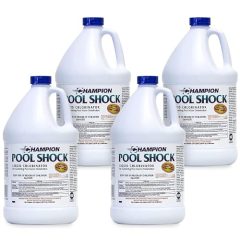 Liquid Chlorine / Sodium Hypochlorite (12.5%)
Everyday sanitizer — the B in BBB View on Amazon →
Liquid Chlorine / Sodium Hypochlorite (12.5%)
Everyday sanitizer — the B in BBB View on Amazon →
Still need help? Ask a Pool & Spa Expert AD
Get a personalized answer from PoolGuy810 — 30 years owning a pool and spa repair company. Describe your issue and get step-by-step help.
Related Pool Guides
Need More Help?
Try our free pool calculators and tools to help diagnose and fix your pool problems.
Browse Pool ToolsSLAM calculator, pH calculator, salt dosing & more