
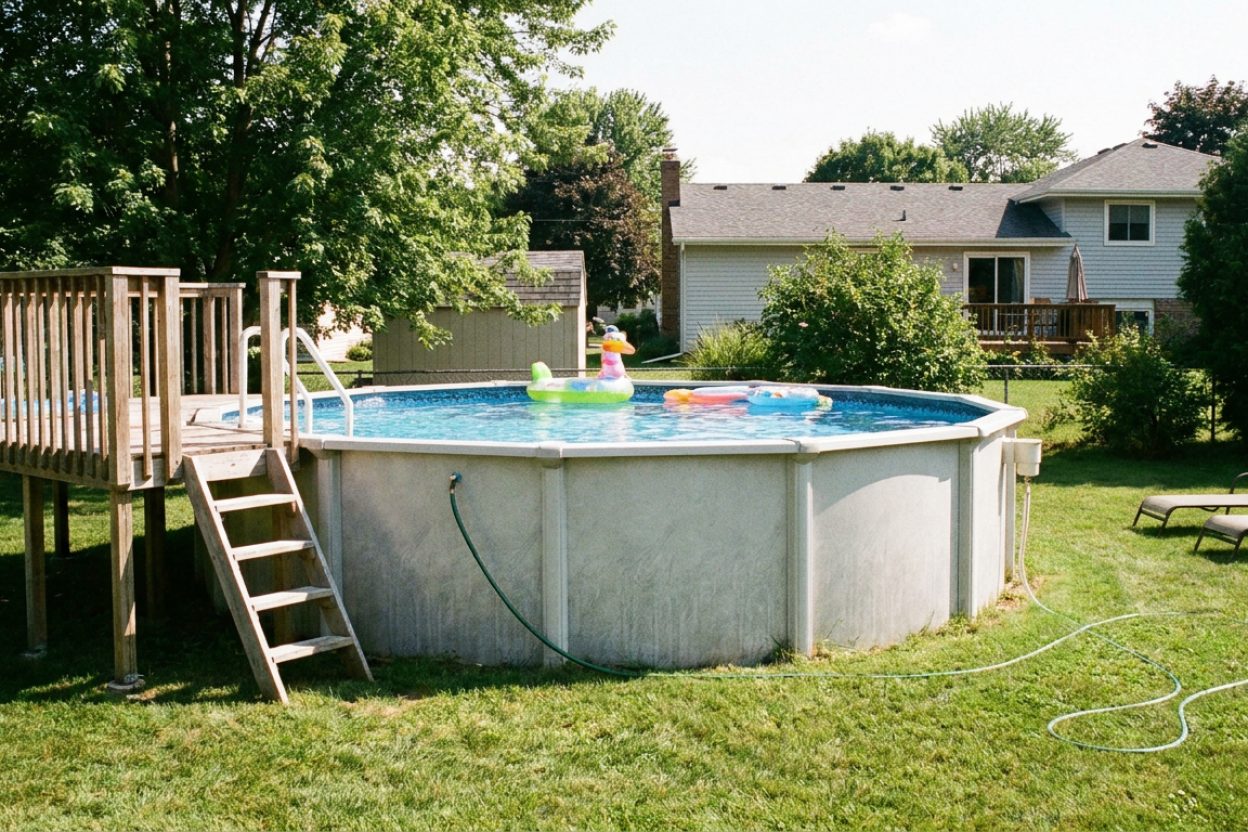
Can Pool Liners Be Reused? Complete Guide for Above Ground

Is it worth trying to reuse my old above ground pool liner?
Read full question
During my pool inspection today I'm staring at this above ground liner with wear and fading covering every inch, wondering if this thing can actually be reused. My above ground pool liner is about 3 years old and looks to be in decent shape - no major tears that I can see, though there might be some minor stretching around the edges.
The pool store told me I'd need to be really careful removing it if I want to reuse it, but they seemed kind of hesitant about whether it's actually a good idea. I'm wondering if anyone has experience with reusing liners? Is it actually cost-effective or am I just setting myself up for problems down the road? I don't want to be penny-wise and pound-foolish here.
Quick Answer
Pool liners can sometimes be reused if they're in good condition, less than 3 years old, and removed carefully without tears or significant stretching. However, reusing liners carries risks and often isn't cost-effective.
When Liner Reuse Might Be Possible
Several factors determine whether your pool liner can be successfully reused:
Age and Material Quality
Liners less than 3 years old made from high-quality vinyl (20-30 mil thickness) have the best chance of successful reuse. Older liners lose elasticity and become brittle, making them prone to tearing during removal and reinstallation.
Reason for Removal
If you're removing the liner for pool relocation, wall repair, or ground leveling rather than liner replacement, reuse becomes more viable. Liners removed due to damage, fading, or chemical deterioration should not be reused.
Storage Conditions
The liner must be stored properly between removal and reinstallation - in a cool, dry place away from direct sunlight and sharp objects. Folding creates permanent creases, so rolling is preferred when possible.
Step-by-Step Liner Removal for Potential Reuse
- Drain the pool completely and allow the liner to dry completely (typically 24-48 hours depending on humidity) to prevent mold growth during storage
- Remove the coping strips carefully using a flat pry bar, taking care not to damage the liner edge
- Work systematically around the pool, gently pulling the liner bead from the track without stretching
- Have helpers assist with removal - never attempt to remove a large liner alone as this causes excessive stretching
- Clean the liner thoroughly with mild soap and water, removing all debris and chemical residue
- Inspect every inch for holes, thin spots, or stress marks that could fail during reinstallation
- Mark any problem areas with removable tape for later evaluation
- Fold carefully along natural crease lines or roll if space permits, placing cardboard between folds
Major Risks of Reusing Pool Liners
Stretching and Poor Fit
Even careful removal causes some stretching. Vinyl doesn't return to its original size, leading to wrinkles, loose areas, and poor appearance. In above-ground pools, this can cause the liner to pull away from walls or create pockets where debris accumulates.
Weakened Material
Removal stress, folding, and storage weaken the vinyl structure. Previously strong areas may develop thin spots or tears under normal water pressure and chemical exposure.
Installation Challenges
Reused liners are harder to position correctly and may not seat properly in tracks. This leads to uneven water distribution and potential structural issues with your above-ground pool walls.
Shortened Lifespan
Even successfully reused liners typically fail within 1-2 years rather than the 6-10 years expected from new above-ground installations.
Professional Assessment Considerations
Before attempting reuse, have a pool professional evaluate your liner's condition. Key indicators for successful reuse include:
- Uniform thickness with no thin spots when held to light
- No stress whitening around fittings or corners
- Minimal stretching during removal
- No chemical staining or brittleness
- Clean removal from coping tracks without tears
Cost-Benefit Analysis
Above-ground pool liners typically cost $200-$600 for replacement. Factor in the high probability of premature failure, potential water damage from leaks, and the labor cost of multiple installations. Most pool professionals recommend against reuse unless the liner is nearly new and removal was necessitated by external factors like pool relocation.
When Replacement Is Always Better
Never attempt to reuse liners that show:
- Any visible holes, tears, or patches
- Significant fading or chemical bleaching
- Brittleness or cracking, especially around fittings
- Previous stretching or wrinkle patterns
- Age over 5 years regardless of appearance
- Mold, mildew, or permanent staining
Proper Liner Disposal
If your liner can't be reused, vinyl liners are technically recyclable, but additives like UV inhibitors and plasticizers make it difficult, so most curbside programs won't accept them. Check with local recycling centers or a specialty pool supplier; many people repurpose old liners as ground sheets or tarps instead.
Safety Warning: Never attempt liner removal or installation alone. The weight and size of above-ground pool liners require multiple people to handle safely and prevent damage.
Still need help? Ask a Pool & Spa Expert AD
Get a personalized answer from PoolGuy810 — 30 years owning a pool and spa repair company. Describe your issue and get step-by-step help.
Related Pool Guides
Need More Help?
Try our free pool calculators and tools to help diagnose and fix your pool problems.
Browse Pool ToolsSLAM calculator, pH calculator, salt dosing & more