
Can Pool Chlorine Make You Itchy? Causes & Solutions

Why does my pool make me itchy despite proper chlorine levels?
Read full question
Finally planning to tackle my itchy pool problem this Saturday — need to figure out why my arms and shoulders keep getting irritated despite maintaining 2-3 ppm free chlorine in my 20,000-gallon inground pool. I maintain pH around 7.4 and alkalinity at 100 ppm, so the basic chemistry seems fine. The itching mainly affects my arms and shoulders where I spend the most time in the water.
I'm wondering if there's something I'm missing about chlorine that could be causing this skin irritation. I shock the pool weekly with calcium hypochlorite and use trichlor tablets in my skimmer, but the itchy feeling has gotten worse over the past month. Could it be the chlorine itself making me react this way, or is there another water chemistry issue I should be looking into? I've tried moisturizing after swimming but that only helps temporarily.
Quick Answer
Yes, pool chlorine can make you itchy, but it's usually not the free chlorine itself causing the problem. Combined chlorine (chloramines) and improper water chemistry are the main culprits that create skin irritation.
One thing worth checking first: if you sanitize with trichlor tablets, every tablet also adds cyanuric acid (CYACyanuric Acid (stabilizer) — Sunscreen for your chlorine — it keeps sunlight from burning it off. The catch: the more you have, the more chlorine you need to keep. learn more →), so your CYA has likely been creeping up. As CYA rises, the same "steady" 2-3 ppm of free chlorine becomes too weak to sanitize — which lets chloramines and irritation build. Test your CYA first; a CYA that has crept up is the most likely reason a pool that "always read fine" suddenly leaves you itchy.
Step-by-Step Solution to Fix Itchy Chlorine Problems
- Test your water chemistry immediately
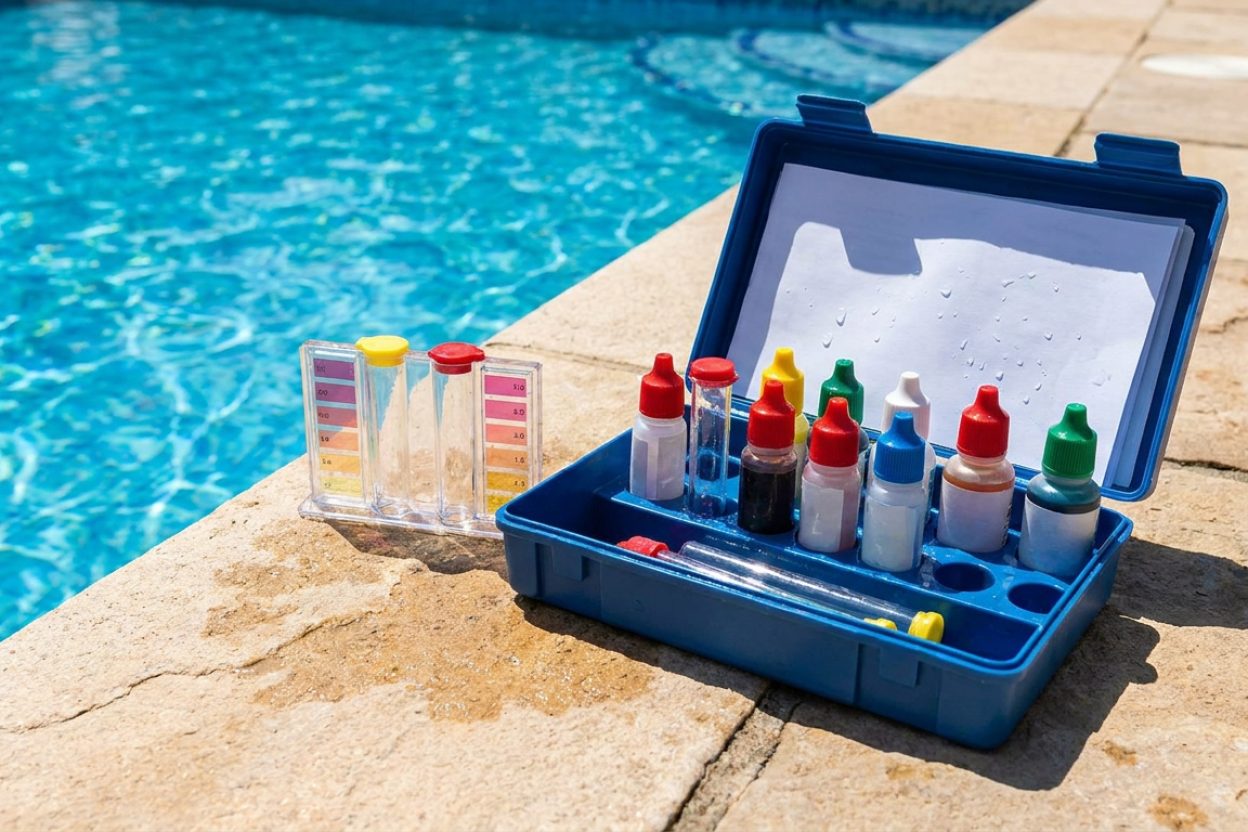
Use a reliable test kit like the Taylor K-2006C to measure:- Free Chlorine (FCFree Chlorine — The chlorine actively sanitizing your water right now. This is the number you keep an eye on. how much you need →): Should match your CYA level — use the pool calculator (step 5) to find your target
- Combined Chlorine (CCCombined Chlorine — "Used-up" chlorine left over from doing its job. Above about 0.5 ppm is the classic sign water needs a shock. learn more →): Should be 0.0 ppm
- pH: Target 7.4-7.6
- Total Alkalinity: 80-120 ppm for regular pools
- Calcium Hardness: 250-350 ppm for plaster pools
- CYA (Cyanuric Acid): 30-50 ppm for regular chlorine
- Address combined chlorine (chloramines) first
If your combined chlorine is above 0.5 ppm, you need to break point chlorinate:- Add liquid chlorine to raise free chlorine to the SLAM/shock level for your CYA (about 40% of CYA) and hold it there, retesting, until combined chlorine drops below 0.5 ppm
- For example: If CC is 1.0 ppm, raise FC to 10 ppm
- Run your pump continuously until CC drops to 0.0 ppm
- Run pump continuously and retest every 2-4 hours. The process typically takes 4-8 hours but may take longer for severe chloramine buildup. Do not consider complete until CC reads 0.0 ppm on two consecutive tests 2 hours apart
- Correct pH imbalances
If pH is outside the 7.4-7.6 range:- High pH (above 7.6): Add muriatic acid - dosage varies significantly based on total alkalinity levels (consult manufacturer's dosing chart - always add in small amounts and retest)
- Low pH (below 7.4): Add sodium carbonate (soda ash) - consult manufacturer's dosing chart as amount needed varies significantly based on current pH and alkalinity levels (add gradually and retest)
- Wait 2 hours and retest before making additional adjustments
- Balance total alkalinity if needed
If TATotal Alkalinity — The buffer that keeps your pH from bouncing around. Get this in range and pH gets a lot easier to manage. learn more → is too high (above 120 ppm):- Lower pH to 7.0-7.2 with muriatic acid
- Run pump for 1 hour, then aerate to raise pH back to 7.4-7.6
- Repeat until TA reaches target range. Note: This aeration method works best for moderate TA reduction (20-40 ppm). For very high TA (above 150 ppm), multiple cycles over several days may be needed, or consider a partial drain and refill
- Maintain proper free chlorine levels
Your free chlorine target isn't a fixed number — it rises with your CYA. Enter your CYA into our all-in-one pool calculator to get the right FC target and SLAMShock Level And Maintain — raise free chlorine to a target based on your CYA and hold it there until the algae is gone. It's a process, not a one-time dose. the SLAM walkthrough → level for your pool, or see the pool water chemistry guide for the full FC/CYAFC/CYA chart — The chart that sets your chlorine target from your stabilizer (CYA) level — the two go together. see the chart → chart. The key point: at higher CYA you must hold a higher FC — which is exactly why a CYA that has crept up from trichlor use can leave you under-chlorinated even when the chlorine number looks normal. - Run filtration system continuously during correction
Keep your pump running 24/7 until water chemistry stabilizes, typically 24-48 hours after final adjustments - Retest water daily for one week
Monitor all chemical levels daily to ensure they remain stable and make minor adjustments as needed
Why Pool Water Causes Itching
Combined Chlorine (Chloramines)
The primary cause of itchy skin isn't free chlorine - it's combined chlorine or chloramines. These form when free chlorine combines with organic contaminants like sweat, urine, cosmetics, and dead skin cells. Chloramines are much more irritating to skin and eyes than free chlorine and create that strong "chlorine smell" many people associate with pools.
pH Imbalances
When pH is too high (above 7.6), chlorine becomes less effective and can feel harsh on skin. When pH is too low (below 7.2), the water becomes acidic and directly irritates skin and eyes. The ideal pH range of 7.4-7.6 closely matches your body's natural pH.
Over-Chlorination
While rare with proper water balance, extremely high free chlorine levels (above 10 ppm) can cause skin irritation. However, this typically only occurs when someone adds excessive amounts of chlorine without testing first.
Prevention Steps
- Test water 2-3 times per week using a reliable test kit
- Maintain proper water balance at all times, not just when problems occur
- Shock weekly with liquid chlorine to prevent chloramine buildup
- Encourage showering before swimming to reduce organic contaminants
- Clean filters regularly - backwash sand/DE filters weekly, clean cartridge filters every 2 weeks
- Use liquid chlorine instead of tablets for regular maintenance to avoid CYA buildup. If you do use trichlor tablets, avoid placing them directly in skimmers - as they dissolve, highly concentrated acidic water passes through your pump, heater, and other equipment, potentially causing corrosion damage over time. Use a floating chlorinator or inline feeder instead
When to Seek Professional Help
Contact a pool professional if you continue experiencing skin irritation after following these steps for one week, or if you're unable to maintain stable water chemistry. Persistent problems may indicate equipment issues, plumbing problems, or contamination sources that require professional diagnosis.
Safety Warning: Always add chemicals to water, never water to chemicals. Wear protective equipment when handling pool chemicals and store them properly away from children and pets.
For the full breakdown of safe chlorine levels by CYA level, see our pool water chemistry guide.
 Taylor K-2006C Complete FAS-DPD Pool & Spa Test Kit
The FAS-DPD kit pool pros trust — reads chlorine accurately even at shock/SLAM levels, plus pH, alkalinity, calcium hardness and CYA. View on Amazon →
Taylor K-2006C Complete FAS-DPD Pool & Spa Test Kit
The FAS-DPD kit pool pros trust — reads chlorine accurately even at shock/SLAM levels, plus pH, alkalinity, calcium hardness and CYA. View on Amazon →
 Liquid Chlorine / Sodium Hypochlorite (12.5%)
Everyday sanitizer — the B in BBB View on Amazon →
Liquid Chlorine / Sodium Hypochlorite (12.5%)
Everyday sanitizer — the B in BBB View on Amazon →
 Acid Blue - Low Fume Muriatic Acid for Swimming Pools & Spas - Lower's pH, Reduces Alkalinity - 2 Gallon
View on Amazon →
Acid Blue - Low Fume Muriatic Acid for Swimming Pools & Spas - Lower's pH, Reduces Alkalinity - 2 Gallon
View on Amazon →
Still need help? Ask a Pool & Spa Expert AD
Get a personalized answer from PoolGuy810 — 30 years owning a pool and spa repair company. Describe your issue and get step-by-step help.
Related Pool Guides
Need More Help?
Try our free pool calculators and tools to help diagnose and fix your pool problems.
Browse Pool ToolsSLAM calculator, pH calculator, salt dosing & more