

Can Pool Chemicals Cause a Rash? Complete Guide & Solutions

Pool chemicals giving me a rash - what's causing it?
Read full question
Last week my kids broke out in red, itchy rashes after swimming, and I'm worried the pool chemicals might be dangerous - should I keep them out? Red, itchy patches on my arms and chest after getting out. Is this from the chlorine or other chemicals? Water looks clear but maybe something's off with the balance. What should I test for and how do I fix this?
Quick Answer
That red, itchy skin after swimming is usually irritant dermatitis from off-balance water — chlorine above the swim range, low pH, or chloramines — not a chemical burn. It's mild and clears up once you balance the water and rinse off. Test regularly to prevent it.
Common Chemical Causes of Pool Rashes
High Free Chlorine Levels
When free chlorine is above about 10 ppm, hold off on swimming until it drops back down — at shock levels it can irritate skin and eyes. Pool-diluted chlorine even at shock level will not harm your equipment or vinyl liner; it is the swimming you wait on, not the pool itself. The key is maintaining FCFree Chlorine — The chlorine actively sanitizing your water right now. This is the number you keep an eye on. how much you need → within the appropriate range for your CYACyanuric Acid (stabilizer) — Sunscreen for your chlorine — it keeps sunlight from burning it off. The catch: the more you have, the more chlorine you need to keep. learn more → level. Always test FC levels 30 minutes after adding any chlorine product.
Low pH Problems
pH below 7.2 creates acidic conditions that are particularly harsh on skin and eyes. Acidic water (low pH) is itself irritating to skin and eyes and is corrosive to surfaces and equipment, so keep pH in the 7.2-7.8 range for comfort and balance. The ideal pH range is 7.4-7.6, where chlorine is effective but not overly harsh.
Chloramine Buildup
Combined chlorine (chloramines) forms when chlorine binds with contaminants like sweat, urine, and body oils. These compounds are actually more irritating than free chlorine itself. You'll know you have chloramines if your pool has a strong "chlorine smell" - properly balanced water with adequate free chlorine actually has very little odor.
Calcium Hardness Extremes
Very low calcium hardness (below 150 ppm) creates "aggressive" water, but its effects are on pool surfaces and equipment — it leaches calcium from plaster, grout, tile, and metal fittings — rather than on swimmers' skin. Calcium hardness is not a common cause of skin rashes. Extremely high levels (above 500 ppm) mostly scale surfaces and cloud water rather than irritate skin.
How to Identify Chemical-Related Rashes
Chemical rashes typically appear within hours of swimming and have distinct characteristics:
- Red, itchy patches that develop shortly after pool exposure
- Dry, flaky skin that feels tight or burning
- Rashes that appear on areas with prolonged water contact (swimsuit lines, under arms)
- Symptoms that improve when you avoid the pool
- Associated eye irritation or respiratory symptoms
Important: If you experience severe burning, blistering, or difficulty breathing, seek medical attention immediately as these may indicate chemical burns or allergic reactions.
Testing and Correcting Your Water Chemistry
Essential Test Parameters
Use a quality test kit like the Taylor K-2006 to measure:
- Free Chlorine (FC): Should match your CYA level using the FC/CYAFC/CYA chart — The chart that sets your chlorine target from your stabilizer (CYA) level — the two go together. see the chart → relationship — our all-in-one pool calculator estimates the free chlorine target for your CYA.
- Combined Chlorine (CCCombined Chlorine — "Used-up" chlorine left over from doing its job. Above about 0.5 ppm is the classic sign water needs a shock. learn more →): Should be less than 0.5 ppm
- pH: Target 7.4-7.6
- Total Alkalinity (TATotal Alkalinity — The buffer that keeps your pH from bouncing around. Get this in range and pH gets a lot easier to manage. learn more →): 80-120 ppm for regular pools, 60-80 for salt water
- Calcium Hardness (CH): 250-350 ppm for plaster pools, 175-225 ppm for vinyl/fiberglass pools
- Cyanuric Acid (CYA): 30-50 ppm for regular chlorine, 70-80 ppm for salt water generators
Correction Steps
If your FC is above 10 ppm, stop adding chlorine and let natural degradation bring levels down. Test every 6-8 hours until FC drops to appropriate levels based on your CYA.
To get an estimate of pH adjuster or other chemicals to add, our all-in-one pool calculator estimates the amount, based on your pool size and current vs. target levels, and accounts for variations in product concentration.
For low pH (below 7.2), add sodium carbonate (soda ash - not to be confused with sodium bicarbonate/baking soda). For high pH (above 7.8), add muriatic acid gradually - dosage varies based on current pH and total alkalinity levels, so consult dosage charts or pool calculators for accurate amounts.
If combined chlorine exceeds 0.5 ppm, perform a SLAMShock Level And Maintain — raise free chlorine to a target based on your CYA and hold it there until the algae is gone. It's a process, not a one-time dose. the SLAM walkthrough → (Shock Level And Maintain) process by raising FC to shock level based on your CYA and maintaining that level until CC drops below 0.5 ppm. Use our all-in-one pool calculator to find the shock level for your CYA.
Treatment for Chemical Rashes
If you've developed a chemical rash:
- Rinse immediately with cool, fresh water to remove any residual chemicals
- Gently pat skin dry - don't rub, which can worsen irritation
- Apply a fragrance-free moisturizer to restore skin barrier
- Consider cool compresses for severe itching
- Avoid harsh soaps or products with alcohol
- Take antihistamines if itching is severe
Most chemical rashes resolve within 2-3 days with proper care. If symptoms worsen or persist beyond a week, consult a healthcare provider.
Prevention Strategies
The best approach is preventing rashes through proper water maintenance:
- Test water chemistry 2-3 times per week
- Maintain consistent chemical levels rather than large corrections
- Shower before and immediately after swimming
- Use liquid chlorine rather than cal-hypo shock, which can cause pH spikes
- Keep detailed logs of chemical additions and test results
- Replace test reagents annually for accurate readings
Consider switching to a salt water chlorine generator if you're particularly sensitive to chemicals - the gentler chlorine production often reduces skin irritation.
When to Seek Professional Help
Contact a pool professional if you consistently struggle with water balance despite regular testing and adjustments. Chronic chemical imbalances often indicate equipment problems, inadequate circulation, or contamination issues that require expert diagnosis.
For the full breakdown of safe chlorine levels by CYA level, see our pool water chemistry guide.
 Taylor K-2006C Complete FAS-DPD Pool & Spa Test Kit
The FAS-DPD kit pool pros trust — reads chlorine accurately even at shock/SLAM levels, plus pH, alkalinity, calcium hardness and CYA. View on Amazon →
Taylor K-2006C Complete FAS-DPD Pool & Spa Test Kit
The FAS-DPD kit pool pros trust — reads chlorine accurately even at shock/SLAM levels, plus pH, alkalinity, calcium hardness and CYA. View on Amazon →
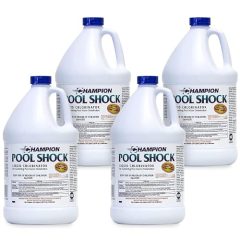 Liquid Chlorine / Sodium Hypochlorite (12.5%)
Everyday sanitizer — the B in BBB View on Amazon →
Liquid Chlorine / Sodium Hypochlorite (12.5%)
Everyday sanitizer — the B in BBB View on Amazon →
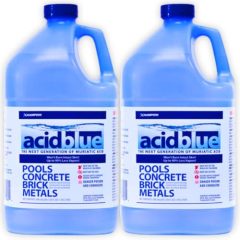 Acid Blue - Low Fume Muriatic Acid for Swimming Pools & Spas - Lower's pH, Reduces Alkalinity - 2 Gallon
View on Amazon →
Acid Blue - Low Fume Muriatic Acid for Swimming Pools & Spas - Lower's pH, Reduces Alkalinity - 2 Gallon
View on Amazon →
Still need help? Ask a Pool & Spa Expert AD
Get a personalized answer from PoolGuy810 — 30 years owning a pool and spa repair company. Describe your issue and get step-by-step help.
Related Pool Guides
Need More Help?
Try our free pool calculators and tools to help diagnose and fix your pool problems.
Browse Pool ToolsSLAM calculator, pH calculator, salt dosing & more