
Can I Use Pool Chemicals in My Spa? Safe Chemical Guide

Are pool chemicals safe to use in my hot tub with kids?
Read full question
Nobody told me that looking at my pool chemical shelf right now with all these bottles means I'd have no clue which are safe for the spa. I want to make sure the water is properly sanitized for the kids, but I'm concerned about whether pool chemicals work the same way in the smaller, hotter water environment.
I currently have chlorine tablets, pH adjusters, and some alkalinity products for our pool. Are there any specific pool chemicals I should avoid using in the spa? I just want to ensure the water is safe and clean for my family without accidentally creating any health risks by using the wrong products.
Quick Answer
Most pool chemicals can be used in spas, but require different concentrations due to higher temperatures and smaller water volume. Chlorine, pH adjusters, and alkalinity increasers work well, but avoid stabilized chlorine and copper-based algaecides. Maintain free chlorine around 3-5 ppm (CDC minimum for hot tubs is 3 ppm), since you should keep stabilizer (CYA) out of a spa, plus pH 7.2-7.8 and TA 80-120 ppm. Shock weekly with liquid chlorine and drain every 3-4 months.
Safe Pool Chemicals for Spas
Chlorine Sanitizers
Liquid chlorine (sodium hypochlorite) is the best choice for spas. It's pure, fast-acting, and adds only chlorine. Because spas hold so little water, add liquid chlorine in very small amounts and re-test before use. Test and adjust every time before use.
Calcium hypochlorite (cal-hypo) works well but adds calcium hardness. Use sparingly. This is better for occasional shock treatments rather than regular sanitizing.
pH and Alkalinity Adjusters
Muriatic acid lowers pH effectively in spas. For a 400-gallon spa, 0.1 ounces typically lowers pH by 0.2 points. Add slowly near return jets with circulation running.
Sodium bisulfate (dry acid) is safer to handle and store. Add it in small amounts. Dissolve completely before adding.
Sodium bicarbonate (baking soda) raises total alkalinity. Add it in small amounts to reach a target TATotal Alkalinity — The buffer that keeps your pH from bouncing around. Get this in range and pH gets a lot easier to manage. learn more → of 80-120 ppm for spas.
Sodium carbonate (soda ash) raises pH quickly. Use small amounts and re-test.
Pool Chemicals to Avoid in Spas
Stabilized Chlorine Products
Trichlor tablets and dichlor granules contain cyanuric acid (CYACyanuric Acid (stabilizer) — Sunscreen for your chlorine — it keeps sunlight from burning it off. The catch: the more you have, the more chlorine you need to keep. learn more →), which builds up quickly in the small volume of spa water. CYA barely breaks down in a hot, high-turnover spa, so it just keeps accumulating - the practical fix is a complete water change to remove it. High CYA levels make chlorine ineffective and create maintenance headaches.
Copper-Based Algaecides
Copper algaecides can cause staining on spa surfaces and equipment, especially at higher temperatures. The heat accelerates chemical reactions, making copper precipitation more likely. Stick to proper chlorine levels instead of relying on algaecides.
Clarifiers and Flocculants
Most clarifiers are designed for pool filtration systems and may not work effectively with spa filters. Some can actually make water cloudier in the high-temperature spa environment.
Dosing Calculations for Spas
Determine Your Spa Volume
Measure your spa's actual capacity - don't rely on manufacturer specifications. Fill from empty while tracking gallons used, or measure dimensions and calculate volume. Round spas: 3.14 × radius² × average depth × 7.5 = gallons.
Scale Down Pool Dosages
Most pool chemical instructions are for 10,000+ gallon pools. For a 400-gallon spa, divide pool dosages by 25. Always start with less and test frequently - you can add more, but you can't remove excess chemicals easily.
Temperature Considerations
Spa temperatures of 100-104°F dramatically affect chemical behavior. Chlorine dissipates 2-3 times faster than in pools. pH tends to rise more quickly due to increased aeration and CO2 loss. Test before each use and maintain free chlorine at roughly 3-5 ppm at all times (never let it fall to zero), keeping it toward the lower end and the water clear before children enter.
Higher temperatures also increase bather load impact. Each person in a 400-gallon spa equals 25-30 people in a 10,000-gallon pool in terms of contamination ratio.
Testing and Maintenance Schedule
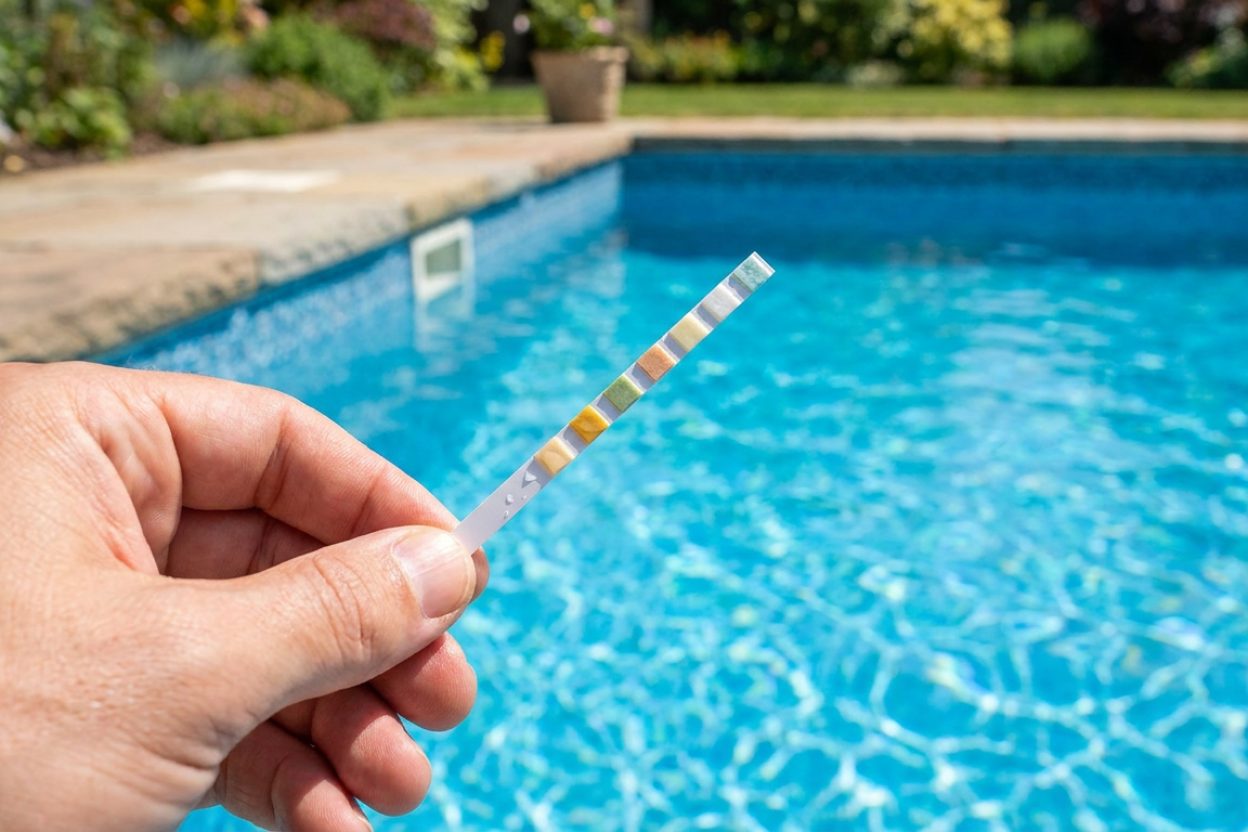
Test spa water before each use with a quality test kit like Taylor K-2006C. Target ranges for spas: Free Chlorine ~3-5 ppm (no CYA), pH 7.2-7.8, Total Alkalinity 80-120 ppm, Calcium Hardness 250-350 ppm for plaster (175-225 ppm for vinyl/fiberglass).
Shock weekly with liquid chlorine after heavy use. Drain and refill every 3-4 months or when total dissolved solids become excessive.
Common Mistakes to Avoid
Over-dosing chemicals: Small volumes mean mistakes get amplified. Always measure carefully and add gradually.
Using stabilized chlorine: CYA buildup happens fast in spas and creates long-term problems.
Neglecting filtration: Clean spa filters weekly and replace quarterly. Dirty filters reduce chemical effectiveness.
Ignoring manufacturer instructions: Some spa manufacturers void warranties if certain chemicals are used. Check your manual first.
Safety Precautions
Child Safety: When children use the spa, maintain stricter chemical balance - ensure free chlorine has fallen below about 10 ppm (not zero), the water is clear, and pH is 7.2-7.8. Allow chemicals to circulate for at least 30 minutes before children enter. Consider non-chlorine shock oxidizers to reduce chemical exposure.
Never mix chemicals - add them separately with circulation running between additions. Store spa chemicals in cool, dry locations away from pool chemicals to avoid cross-contamination. Always add chemicals to water, never water to chemicals.
Keep detailed records of chemical additions and test results. This helps identify patterns and prevents over-treatment. When in doubt, test more frequently rather than guessing chemical needs.
For the full breakdown of safe chlorine levels by CYA level, see our pool water chemistry guide.
 Taylor K-2006C Complete FAS-DPD Pool & Spa Test Kit
The FAS-DPD kit pool pros trust — reads chlorine accurately even at shock/SLAM levels, plus pH, alkalinity, calcium hardness and CYA. View on Amazon →
Taylor K-2006C Complete FAS-DPD Pool & Spa Test Kit
The FAS-DPD kit pool pros trust — reads chlorine accurately even at shock/SLAM levels, plus pH, alkalinity, calcium hardness and CYA. View on Amazon →
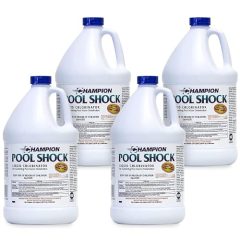 Liquid Chlorine / Sodium Hypochlorite (12.5%)
Everyday sanitizer — the B in BBB View on Amazon →
Liquid Chlorine / Sodium Hypochlorite (12.5%)
Everyday sanitizer — the B in BBB View on Amazon →
Still need help? Ask a Pool & Spa Expert AD
Get a personalized answer from PoolGuy810 — 30 years owning a pool and spa repair company. Describe your issue and get step-by-step help.
Related Pool Guides
Need More Help?
Try our free pool calculators and tools to help diagnose and fix your pool problems.
Browse Pool ToolsSLAM calculator, pH calculator, salt dosing & more