
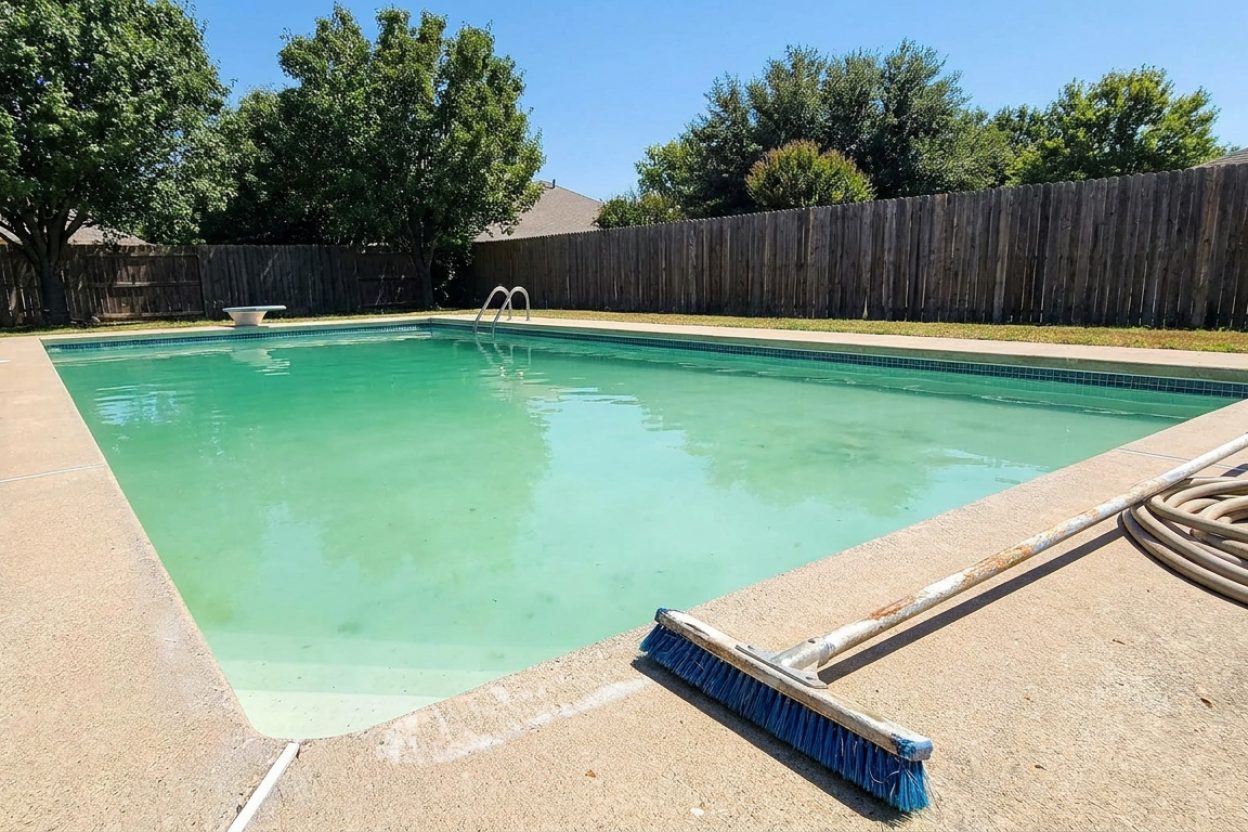
Can I Swim in Green Pool Water? Health Risks & Safety Guide

Is it safe to swim in my green pool water?
Read full question
Pulled back my pool cover this morning and my crystal-clear water had somehow transformed into what looks like green Jell-O overnight. I know it's probably algae, but I'm wondering if it's actually dangerous to swim in or just unsightly? My kids are asking when they can get back in, and I'm not sure what to tell them.
The pool store told me I need to shock it and add algaecide, but they didn't really explain the health risks. Should I be worried about infections or other problems if someone accidentally gets in before it's cleared up? I want to make sure I'm keeping my family safe while I figure out how to fix this.
Quick Answer
No — don't swim in green pool water. The algae has crashed your chlorine, so the water is unsanitized and harbors germs that cause stomach upset, skin rashes, and ear/eye irritation (worst for sensitive people), and you can't see the bottom. It isn't toxic; clear it with the SLAM method and rebalance before swimming.
Why Green Pool Water is Dangerous
Green pool water isn't just unsightly — it tells you the sanitizer has crashed. Algae only blooms once free chlorine has dropped near zero, and without an active sanitizer the everyday germs that swimmers introduce are no longer being killed off. The algae itself isn't poisonous; the problem is that the water has lost the chlorine that normally keeps germs in check.
Realistic Health Risks of Swimming in Green Water
These are the issues actually associated with swimming in unsanitized water — common, generally mild in healthy people, and worse the more sensitive you are:
- Stomach illness: nausea, vomiting, and diarrhea from swallowing water (the most common problem)
- Skin problems: rashes, folliculitis (infected hair follicles), and dermatitis — bacteria like Pseudomonas and Staph are the usual cause
- Ear and eye irritation: swimmer's ear and conjunctivitis
- Parasites: Giardia and Cryptosporidium can survive in poorly sanitized water (they don't multiply there) and cause prolonged diarrhea if present
Severe infections are uncommon in healthy swimmers from a backyard pool — the reason to stay out isn't that green water is deadly, it's that nothing is keeping ordinary germs in check.
What Causes Green Pool Water
Understanding why your pool turned green helps prevent future occurrences and emphasizes why swimming is dangerous. Green water results from a perfect storm of conditions that allow algae to multiply rapidly.
Primary Causes
- Low or zero chlorine levels: Without adequate sanitizer, algae blooms within hours
- High pH levels: When pH exceeds 7.8, chlorine becomes significantly less effective
- Low cyanuric acid (CYACyanuric Acid (stabilizer) — Sunscreen for your chlorine — it keeps sunlight from burning it off. The catch: the more you have, the more chlorine you need to keep. learn more →): Without stabilizer, chlorine dissipates quickly in sunlight
- Poor circulation: Dead spots in your pool allow algae to establish colonies
- Phosphates and nitrates: These nutrients feed algae growth
- Warm temperatures: Heat accelerates algae reproduction
How to Safely Clear Green Pool Water
The most reliable way to make your pool safe for swimming again is the SLAMShock Level And Maintain — raise free chlorine to a target based on your CYA and hold it there until the algae is gone. It's a process, not a one-time dose. the SLAM walkthrough → method (Shock Level And Maintain). This process kills all algae and bacteria, restoring your pool to a safe, swimmable condition.
Step-by-Step SLAM Process
- Test your water chemistry: Use a Taylor K-2006 test kit to measure FCFree Chlorine — The chlorine actively sanitizing your water right now. This is the number you keep an eye on. how much you need → (free chlorine), pH, CYA, and total alkalinity
- Calculate shock level: Your shock level depends on your CYA reading - typically 40% of your CYA level. Use our all-in-one pool calculator to estimate the amount of liquid chlorine needed.
- Add liquid chlorine: Liquid chlorine (sodium hypochlorite) is the cleanest choice; cal-hypo granules work too but add calcium - just avoid dichlor/trichlor, which add CYA. Add liquid chlorine to achieve your target shock level - this typically requires multiple gallons for green pools
- Adjust pH to 7.2-7.4: Use muriatic acid if pH is high - add muriatic acid in small increments based on your specific water chemistry - consult dosing charts or pool calculator as amounts vary significantly
- Run filtration 24/7: Continuous circulation is essential during SLAM
- Brush thoroughly: Brush all surfaces twice daily to break up algae colonies
- Test and maintain shock level: Test FC every 2-4 hours and add chlorine to maintain shock level
- Continue until clear: SLAM until water is crystal clear and FC holds overnight
When It's Safe to Swim Again
Your pool is safe for swimming only when all of these conditions are met:
- You can clearly see the bottom and main drain
- Free chlorine holds overnight without dropping significantly
- Free chlorine is below 10 ppm (per CDC) and back at its normal level for your CYA
- pH is between 7.2-7.8
- No visible algae on surfaces
Prevention is Key
Preventing green water is much easier than treating it. Maintain proper water balance with regular testing and chemical adjustments.
Essential Maintenance Schedule
- Test water 2-3 times weekly: Monitor FC, pH, and CYA levels
- Keep FC in the target range for your CYA: for 50 ppm CYA, roughly 4–6 ppm
- Keep pH at 7.4-7.6: a comfortable, balanced range that also protects surfaces
- Brush and vacuum regularly: Remove debris and prevent algae attachment
Emergency Situations
If someone has already swum in green water: Have them shower immediately with antibacterial soap, flush eyes with clean water, and monitor for symptoms of infection. Seek medical attention if skin rashes, eye irritation, or gastrointestinal symptoms develop.
Remember, no amount of urgency to swim is worth getting in unsanitized water. The SLAM process typically takes 3-7 days depending on how green your pool is — a worthwhile wait to spare yourself and your family an avoidable stomach bug or skin infection.
For the full breakdown of safe chlorine levels by CYA level, see our pool water chemistry guide.
 Taylor K-2006C Complete FAS-DPD Pool & Spa Test Kit
The FAS-DPD kit pool pros trust — reads chlorine accurately even at shock/SLAM levels, plus pH, alkalinity, calcium hardness and CYA. View on Amazon →
Taylor K-2006C Complete FAS-DPD Pool & Spa Test Kit
The FAS-DPD kit pool pros trust — reads chlorine accurately even at shock/SLAM levels, plus pH, alkalinity, calcium hardness and CYA. View on Amazon →
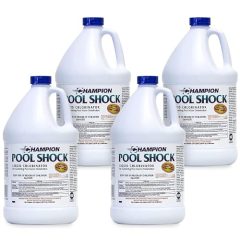 Liquid Chlorine / Sodium Hypochlorite (12.5%)
Everyday sanitizer — the B in BBB View on Amazon →
Liquid Chlorine / Sodium Hypochlorite (12.5%)
Everyday sanitizer — the B in BBB View on Amazon →
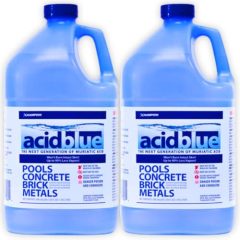 Acid Blue - Low Fume Muriatic Acid for Swimming Pools & Spas - Lower's pH, Reduces Alkalinity - 2 Gallon
View on Amazon →
Acid Blue - Low Fume Muriatic Acid for Swimming Pools & Spas - Lower's pH, Reduces Alkalinity - 2 Gallon
View on Amazon →
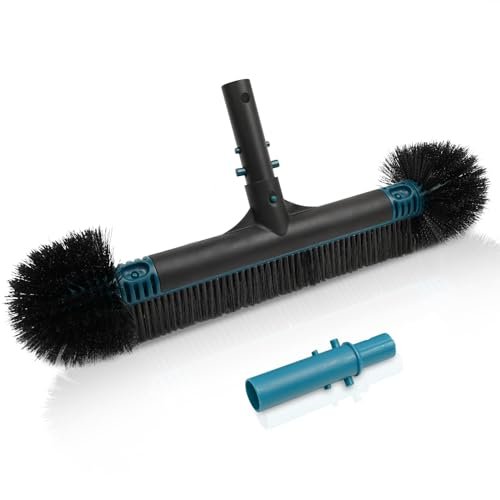 Poolvio 20" 2-in-1 Pool Brush Head (Walls & Floor)
Sturdy 20-inch brush head that clips onto any standard telescopic pole. View on Amazon →
Poolvio 20" 2-in-1 Pool Brush Head (Walls & Floor)
Sturdy 20-inch brush head that clips onto any standard telescopic pole. View on Amazon →
Still need help? Ask a Pool & Spa Expert AD
Get a personalized answer from PoolGuy810 — 30 years owning a pool and spa repair company. Describe your issue and get step-by-step help.
Related Pool Guides
Need More Help?
Try our free pool calculators and tools to help diagnose and fix your pool problems.
Browse Pool ToolsSLAM calculator, pH calculator, salt dosing & more