
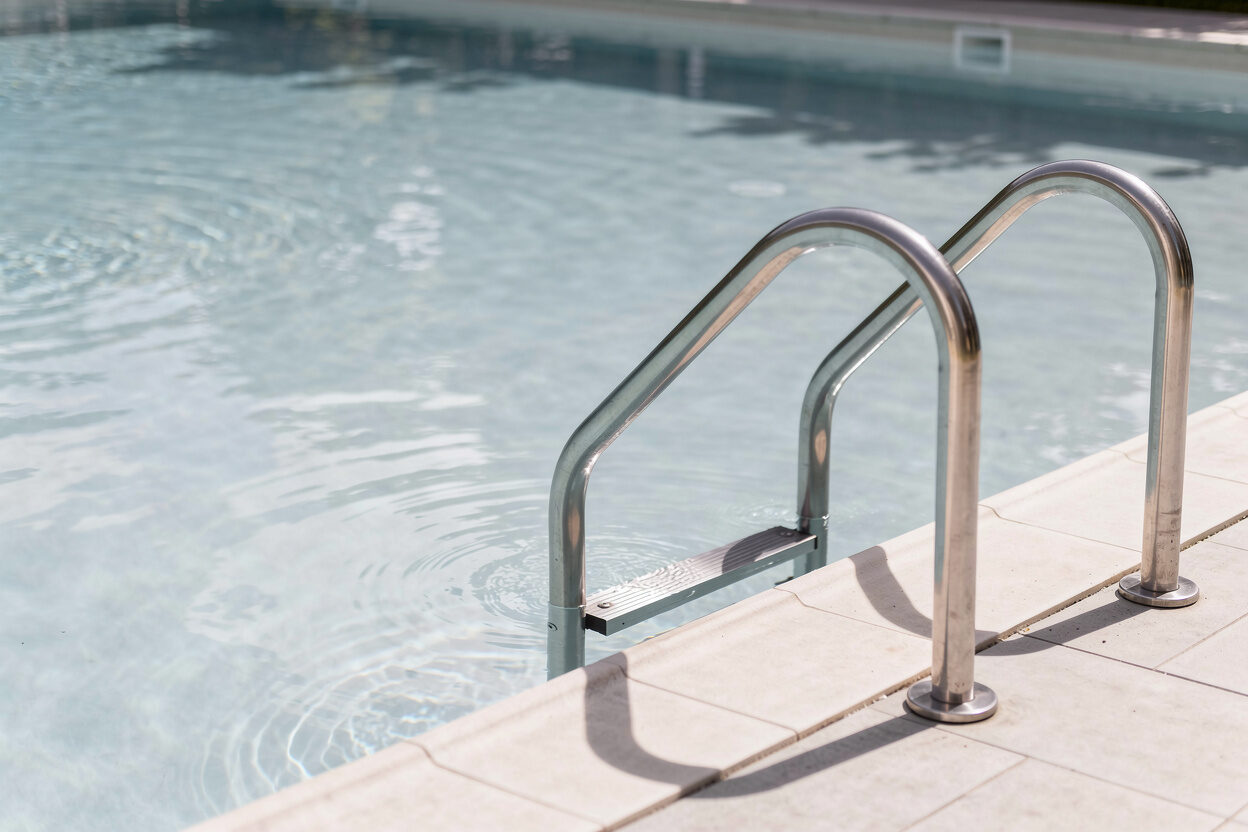
Can I Swim in Cloudy Pool Water? Safety Risks Explained

Is it safe to swim when my pool water has turned cloudy?
Read full question
I tried everything to clear my 20,000 gallon inground pool's cloudiness and about to drop $200 on chemicals — should I buy them or is it safe to swim first? The water looks like a light milky haze - you can see the bottom but it's definitely not crystal clear like it usually is. I've been maintaining chlorine levels around 2-3 ppm and pH at 7.4, but the cloudiness appeared after we had several heavy rainstorms and a pool party with about 15 people.
I'm particularly concerned about safety since we have young children who aren't strong swimmers yet. The visibility isn't terrible, but it's definitely reduced compared to normal. I've tried shocking the pool with 2 pounds of calcium hypochlorite and running the filter continuously for 24 hours, but the cloudiness persists. Should we avoid swimming until this clears up completely, or is it okay to use the pool with some basic precautions?
Quick Answer
No — the main risk is reduced visibility: you may not be able to see a swimmer in distress on the bottom, which is especially dangerous with young or weak swimmers. Cloudiness usually signals a filtration or water-balance problem (common after heavy rain or a big pool party), not necessarily dangerous pathogens, so clear the water and confirm you can see the main drain before anyone swims.
Quick Answer: Don't Risk It
Cloudy pool water is a real safety concern — not because it is a pathogen soup, but because you may not be able to see a swimmer in distress on the bottom. While it might be tempting to take a dip anyway, cloudy water poses significant safety risks that aren't worth taking. The cloudiness indicates an underlying problem that needs to be addressed before the pool is safe for swimming.
Why Cloudy Water is Dangerous
Visibility and Safety Concerns
The most immediate danger is reduced visibility. You need to be able to see the bottom of your pool clearly for several critical safety reasons:
- Spotting swimmers in distress, especially children
- Seeing pool equipment, toys, or debris that could cause injury
- Identifying depth changes and pool features
- Monitoring swimmers' movements and behavior
Health Risks from Contaminants
Cloudy water often indicates the presence of contaminants that can make you sick:
- Bacteria and algae: Even early-stage algae growth that hasn't turned green yet can cause cloudiness and harbor harmful microorganisms
- Organic waste: Body oils, lotions, urine, and other swimmer waste can create cloudiness while providing food for bacteria
- Environmental contaminants: Pollen, dust, and other airborne particles can cloud water and carry pathogens
- Chemical imbalances: Poor water chemistry allows harmful organisms to thrive
What's Causing Your Cloudy Water
Most Common Causes
Understanding the cause helps determine how quickly you can get back to swimming:
- Poor filtration: Dirty filter, inadequate run time, or malfunctioning equipment
- Low free chlorine: Insufficient sanitizer allows bacteria and algae to multiply
- pH imbalance: High pH (above 7.8) reduces chlorine effectiveness and can cause calcium precipitation
- High total alkalinity: Can lead to pH drift and cloudiness
- Calcium hardness issues: Too high causes scaling, too low causes etching and corrosion of plaster and grout
- Heavy bather load: More swimmers introduce more contaminants
- Recent chemical additions: Some chemicals can temporarily cloud water
How to Clear Cloudy Water Fast
Test Your Water First
Before adding any chemicals, test your water using a reliable test kit like the Taylor K-2006. You need to know:
- Free chlorine (FCFree Chlorine — The chlorine actively sanitizing your water right now. This is the number you keep an eye on. how much you need →) level
- pH level
- Total alkalinity (TATotal Alkalinity — The buffer that keeps your pH from bouncing around. Get this in range and pH gets a lot easier to manage. learn more →)
- Cyanuric acid (CYACyanuric Acid (stabilizer) — Sunscreen for your chlorine — it keeps sunlight from burning it off. The catch: the more you have, the more chlorine you need to keep. learn more →) if you use stabilized chlorine
- Calcium hardness (CH)
The SLAM Method for Serious Cloudiness
If your water is significantly cloudy or showing early signs of algae, use the SLAMShock Level And Maintain — raise free chlorine to a target based on your CYA and hold it there until the algae is gone. It's a process, not a one-time dose. the SLAM walkthrough → (Shock Level And Maintain) method:
- Calculate your shock level: Use the all-in-one pool calculator to determine target FC level (typically 40% of CYA)
- Add liquid chlorine: Use liquid pool chlorine (typically 10-12.5% sodium hypochlorite), not granular shock. Add enough to reach shock level for your CYA — our all-in-one pool calculator estimates the amount
- Run your filter continuously until water clears
- Brush the pool daily to dislodge any particles
- Test and maintain FC level every few hours, adding more chlorine as needed
- Backwash or clean filter when pressure rises 8-10 psi above clean reading
For Mild Cloudiness
If cloudiness is minor and recent:
- Adjust pH to 7.4-7.6 using muriatic acid if high, sodium carbonate if low
- Shock the pool with liquid chlorine to 2-3x normal FC level
- Run filter for 24-48 hours continuously
- Use a clarifier like Natural Chemistry Clear and Perfect or BioGuard Polysheen Blue to help the filter capture fine particles
Prevention Tips
Maintain Proper Chemistry
- FC: 4-6 ppm for CYA 30-50 ppm pools, 6-8 ppm for CYA 70-80 ppm salt water pools
- pH: 7.4-7.6 for optimal chlorine effectiveness
- TA: 80-120 ppm for regular pools, 60-80 for salt water generators
- CYA: 30-50 ppm for regular pools, 70-80 for SWGSalt Water Generator — The "salt cell" that makes chlorine from the salt in a saltwater pool. Same chlorine — it just makes its own. pool terms →
- CH: 250-350 ppm for plaster, 150-250 for vinyl/fiberglass
Operational Best Practices
- Run your filter 8-12 hours daily during swimming season
- Clean or backwash filter regularly
- Brush pool walls and floor weekly
- Test water 2-3 times per week
- Shower before swimming to reduce contaminant load
When You Can Swim Again
Wait until free chlorine is below 10 ppm (per CDC), you can clearly see the bottom and main drain of the deep end, and your water chemistry is balanced. This typically takes 24-72 hours depending on the severity of cloudiness and your pool's circulation system. The water should be clear with proper FC levels before anyone enters the pool.
Remember, patience now prevents health problems later. A few days of not swimming is much better than dealing with recreational water illnesses or safety incidents.
For the full breakdown of safe chlorine levels by CYA level, see our pool water chemistry guide.
 Taylor K-2006C Complete FAS-DPD Pool & Spa Test Kit
The FAS-DPD kit pool pros trust — reads chlorine accurately even at shock/SLAM levels, plus pH, alkalinity, calcium hardness and CYA. View on Amazon →
Taylor K-2006C Complete FAS-DPD Pool & Spa Test Kit
The FAS-DPD kit pool pros trust — reads chlorine accurately even at shock/SLAM levels, plus pH, alkalinity, calcium hardness and CYA. View on Amazon →
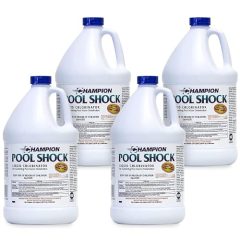 Liquid Chlorine / Sodium Hypochlorite (12.5%)
Everyday sanitizer — the B in BBB View on Amazon →
Liquid Chlorine / Sodium Hypochlorite (12.5%)
Everyday sanitizer — the B in BBB View on Amazon →
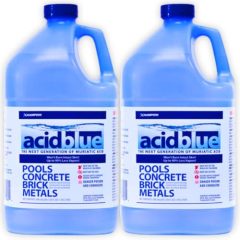 Acid Blue - Low Fume Muriatic Acid for Swimming Pools & Spas - Lower's pH, Reduces Alkalinity - 2 Gallon
View on Amazon →
Acid Blue - Low Fume Muriatic Acid for Swimming Pools & Spas - Lower's pH, Reduces Alkalinity - 2 Gallon
View on Amazon →
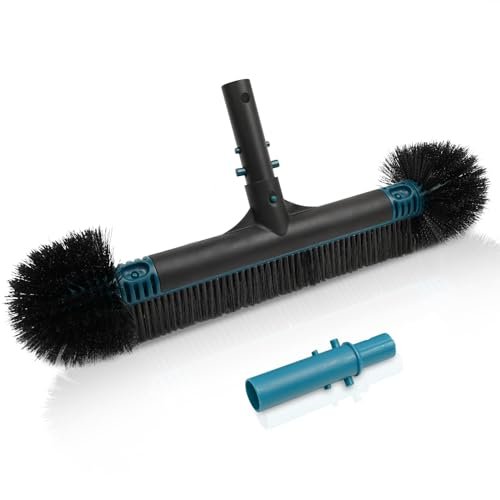 Poolvio 20" 2-in-1 Pool Brush Head (Walls & Floor)
Sturdy 20-inch brush head that clips onto any standard telescopic pole. View on Amazon →
Poolvio 20" 2-in-1 Pool Brush Head (Walls & Floor)
Sturdy 20-inch brush head that clips onto any standard telescopic pole. View on Amazon →
Still need help? Ask a Pool & Spa Expert AD
Get a personalized answer from PoolGuy810 — 30 years owning a pool and spa repair company. Describe your issue and get step-by-step help.
Need More Help?
Try our free pool calculators and tools to help diagnose and fix your pool problems.
Browse Pool ToolsSLAM calculator, pH calculator, salt dosing & more