
Best Pool Chemicals
Pool care comes down to a short list of single-ingredient chemicals, dosed off an actual test result rather than a fixed schedule — the approach the Trouble Free Pool (TFP) community has refined over the years. It is economical and predictable: a handful of staples cover almost everything a pool needs across a season.
You will see it called the “BBB” method — Bleach, Baking soda, and Borax — though the acronym is loose, since muriatic acid is just as essential and is not one of the B’s. TFP now mostly calls the overall approach TFPC (Trouble Free Pool Care). Either way the idea is the same: test the water, then add what the numbers call for.
What follows is grouped by how each chemical fits into that routine — the two you reach for most, the balancers you set occasionally, the chlorine sources behind “shocking,” and the problem-solvers worth having on hand. Every product below was checked on Amazon for a current image and rating.
Start here: a good test kit
Taylor K-2006C Complete Pool & Spa Test Kit
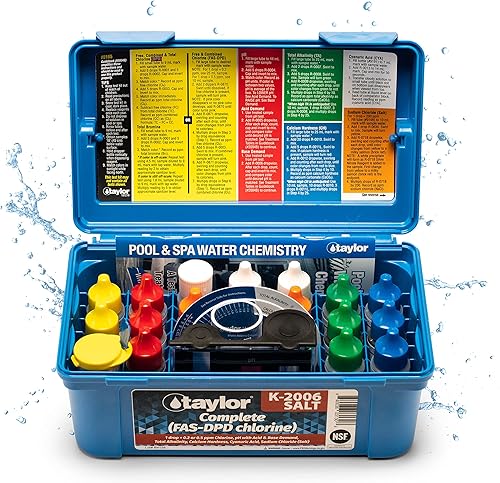
Everything else depends on being able to read the water, so a reliable test kit is the foundation. A drops-based FAS-DPD kit is the standard — the Taylor K-2006C (large-reagent version) and the TF-Pro / TF-100 are the two most popular. Either measures free chlorine accurately at the levels that matter and includes the CYA test that tells you how much chlorine a pool actually needs. Test strips are great for a quick daily glance; for the numbers you dose against, drops give you confidence.
Best for: Anyone serious about dialing in their water
Check price on Amazon →The two essentials (every pool, all season)
1. Liquid Chlorine (Sodium Hypochlorite 12.5%) — your sanitizer
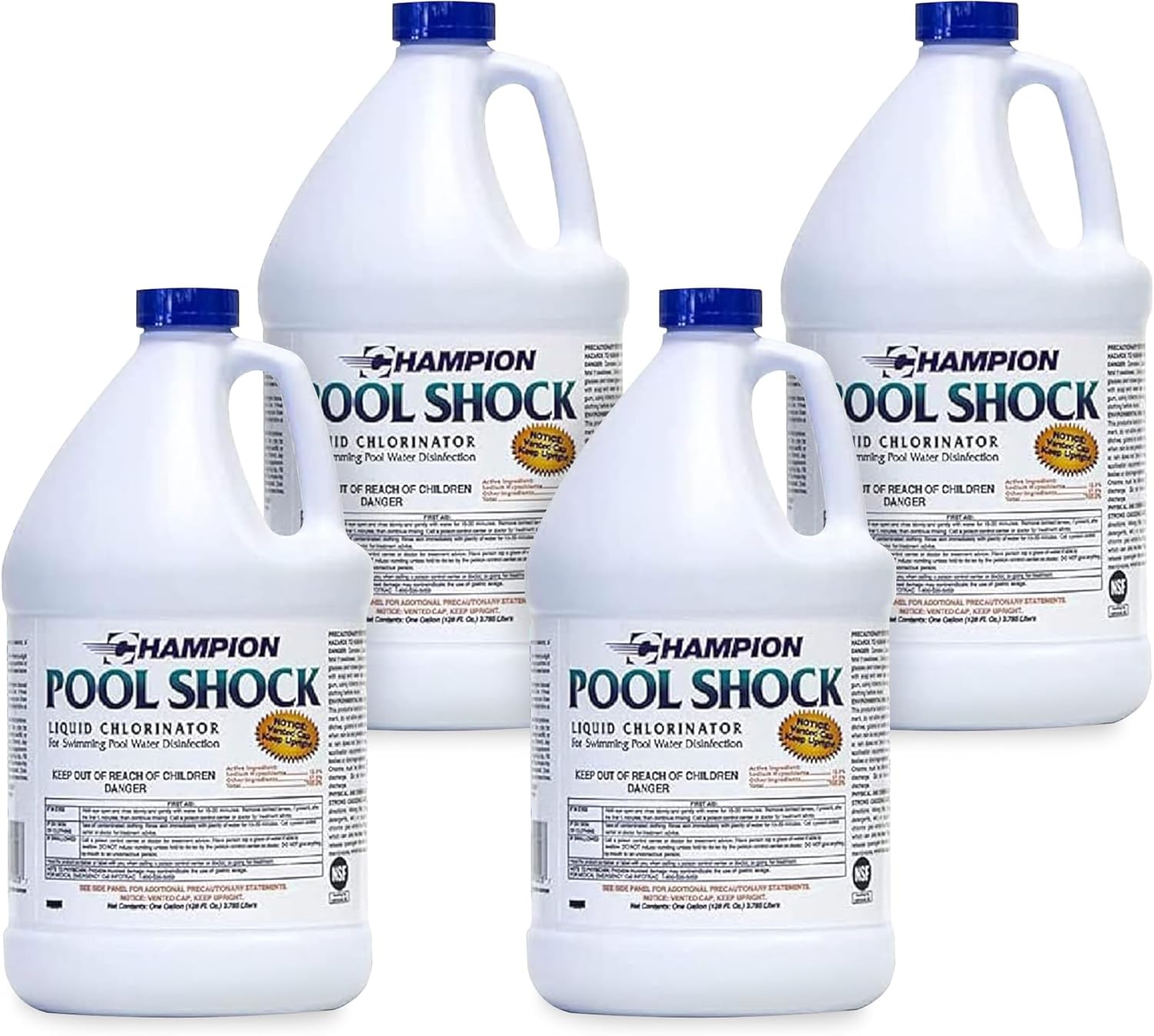
If there is a single most important chemical on the list, this is it. Liquid chlorine (sodium hypochlorite, usually 10–12.5%) sanitizes the water and burns off contaminants, and it adds no cyanuric acid or calcium — so nothing accumulates over time. Pool-strength jugs are stronger and cheaper per dose than grocery bleach (plain unscented 8.25% works in a pinch). One thing worth knowing: liquid chlorine loses strength on the shelf, so fresh stock is best.
Best for: Everyday sanitizing in every pool
Check price on Amazon →2. Muriatic Acid — lowers pH (and total alkalinity)
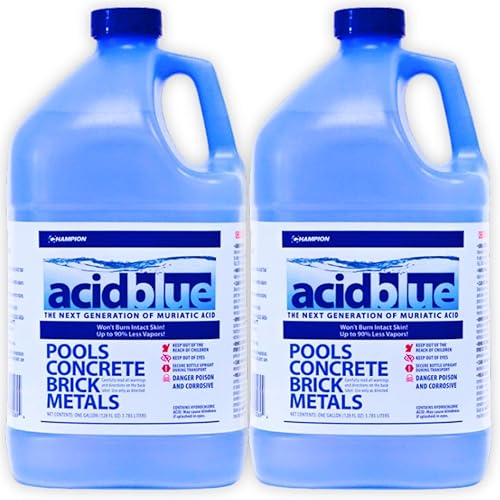
Pool pH naturally drifts upward — especially with a salt system or an aerated water feature — and muriatic acid is the standard way to bring it back down. It also lowers total alkalinity when that runs high. Low-fume formulas are a bit easier to handle and store. The one rule to remember: always add acid to the water (never water to acid), with the pump running.
Best for: Bringing high pH or alkalinity back into range
Check price on Amazon →Water balancers (set occasionally)
3. Cyanuric Acid (Stabilizer) — sunscreen for your chlorine
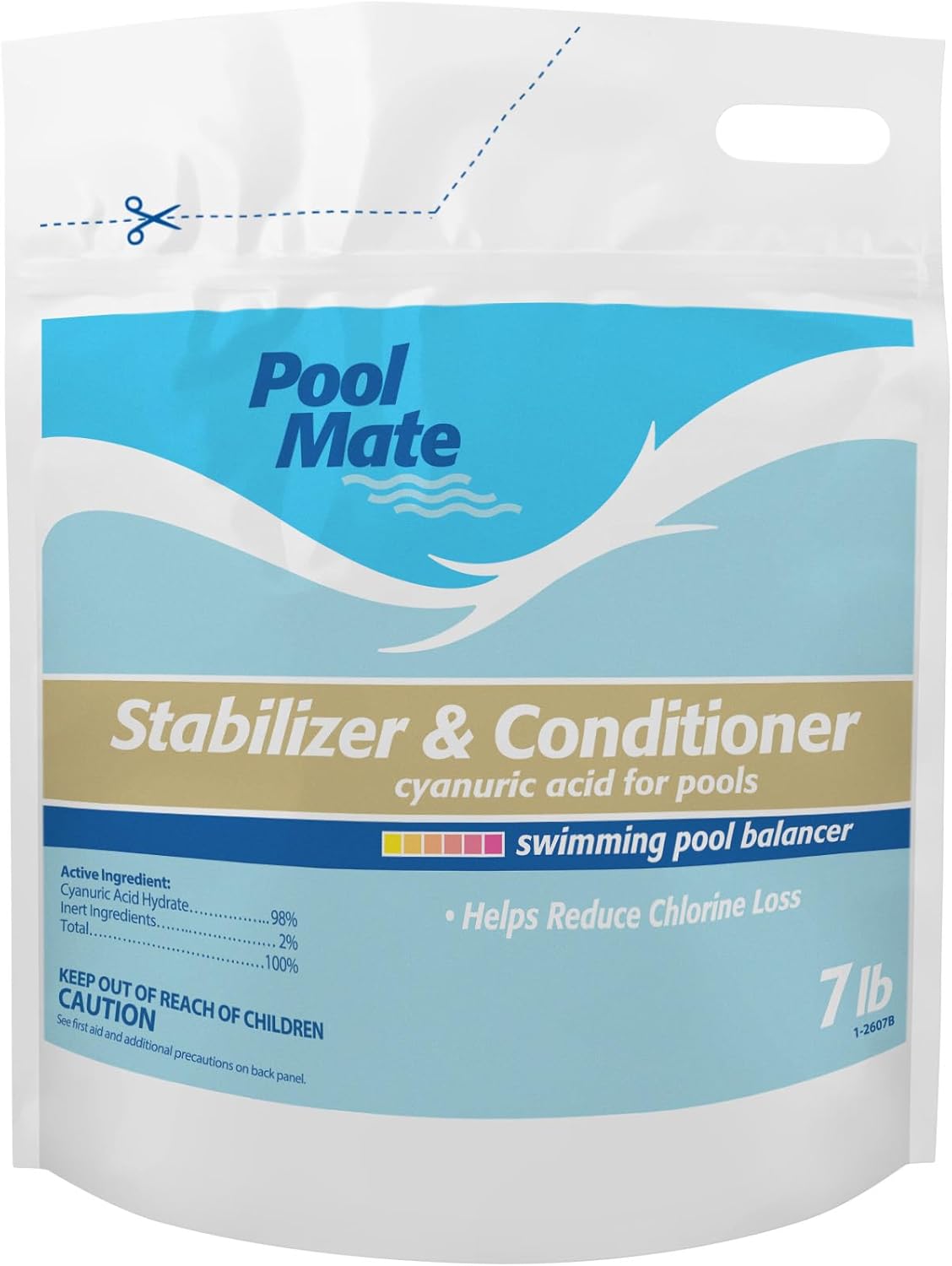
Without CYA, UV burns off most free chlorine within hours, so a little stabilizer makes chlorine last dramatically longer in sunlight. It also ties the system together: as CYA rises, the free chlorine target rises with it, so the two are always read as a pair. A common target is 30–60 ppm for a liquid-chlorine pool and 60–90 ppm for a salt (SWG) pool. CYA is added once and largely left alone, so aim to land in range rather than overshoot.
Best for: Outdoor pools losing chlorine to the sun
Check price on Amazon →4. Baking Soda — raises total alkalinity
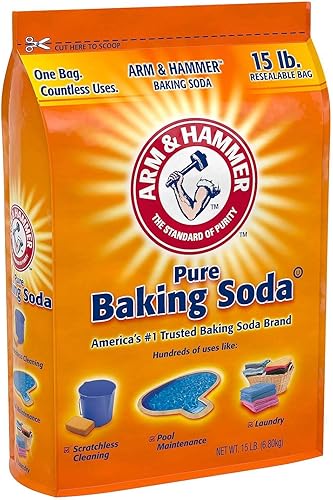
Plain sodium bicarbonate, cheaper by the bulk bag. It raises total alkalinity (TA), the buffer that keeps pH stable. A common target is 50–90 ppm, often toward the lower end for salt pools and any pool that tends to climb in pH. Many pools only need it at the initial balance and rarely after.
Best for: Stabilizing a low or bouncing pH
Check price on Amazon →5. Borax (20 Mule Team) — raises pH with little effect on alkalinity
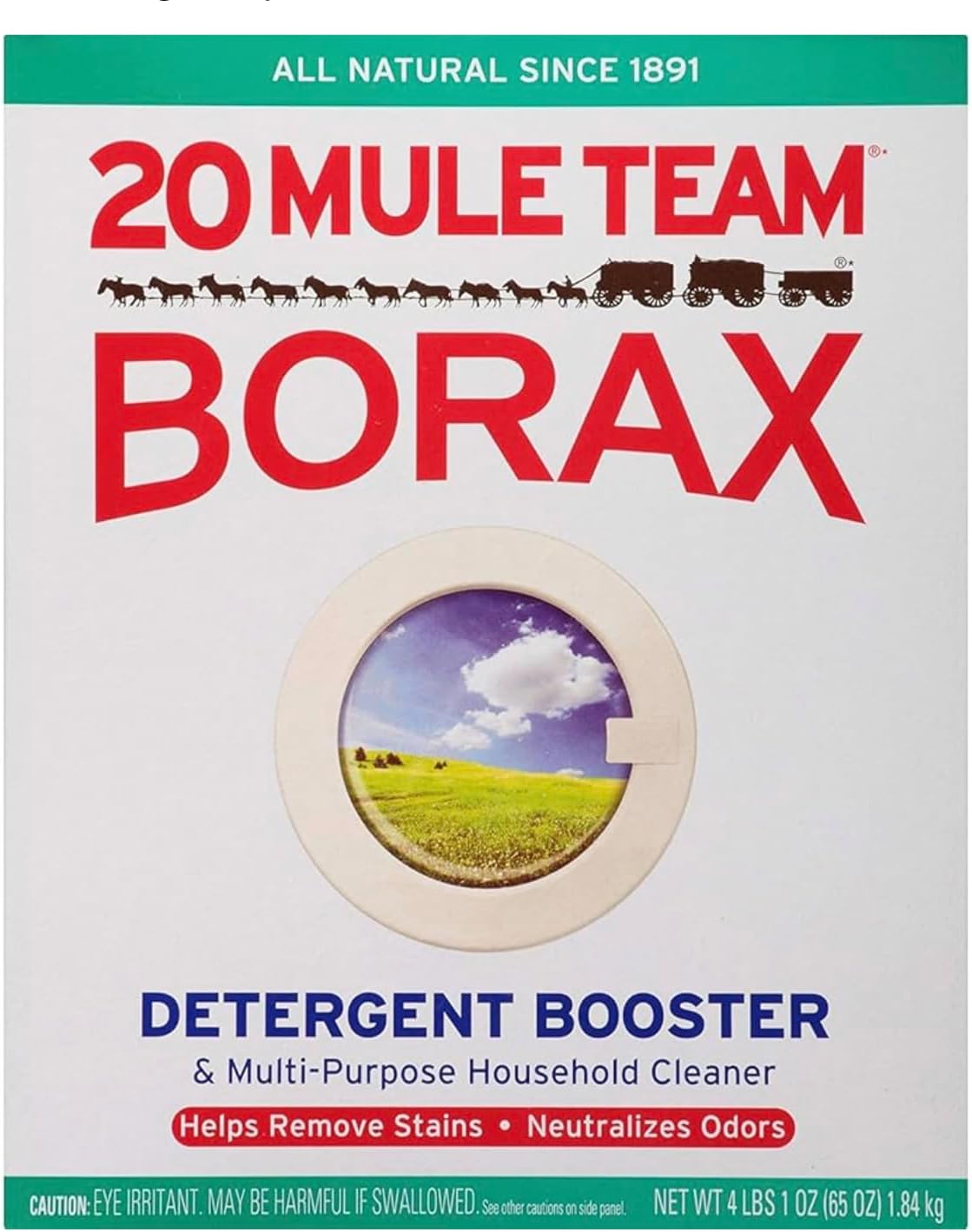
When pH is low but alkalinity is already where you want it, borax nudges pH up without moving TA much. (Soda ash is the alternative when you want to raise both at once.) The common source is 20 Mule Team from the laundry aisle. Holding borates around 30–50 ppm is a nice optional extra — it adds mild algae resistance, helps buffer pH, and gives the water a softer feel, which is why a lot of salt-pool owners run them.
Best for: Raising pH when alkalinity is already good
Check price on Amazon →6. Calcium Chloride — raises calcium hardness
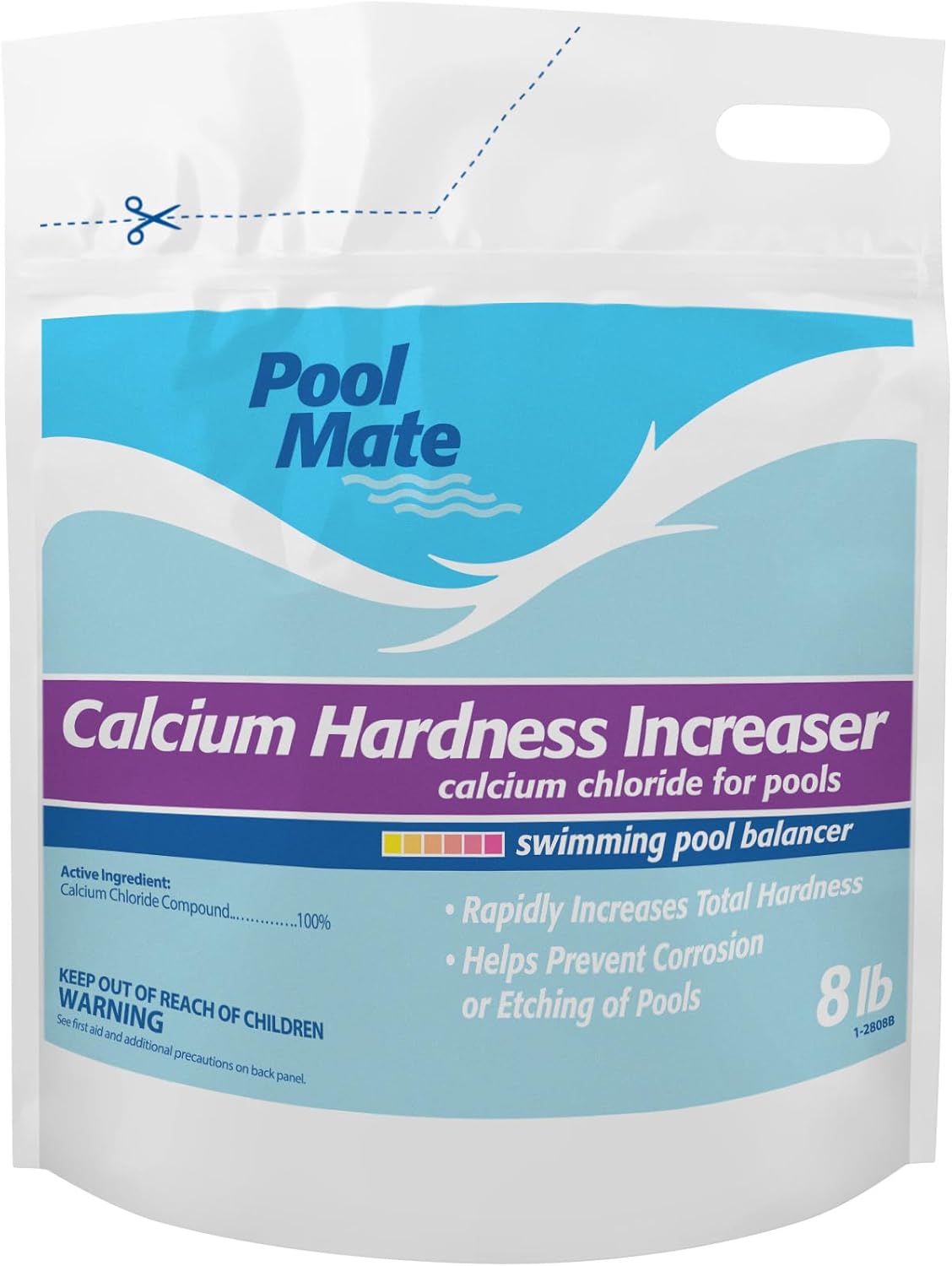
Mostly for plaster, gunite, and some fiberglass surfaces, where adequate calcium keeps the water from etching the finish. A typical target is 250–350 ppm for plaster (often 350–550 for a plaster salt pool to protect the cell); vinyl-liner pools generally do not need it. Check fill water first — if it is already hard, calcium tends to climb on its own. Pre-dissolving it in a bucket before adding is easier on the surface.
Best for: Plaster and gunite pools with soft water
Check price on Amazon →7. Pool Salt — for salt-system pools
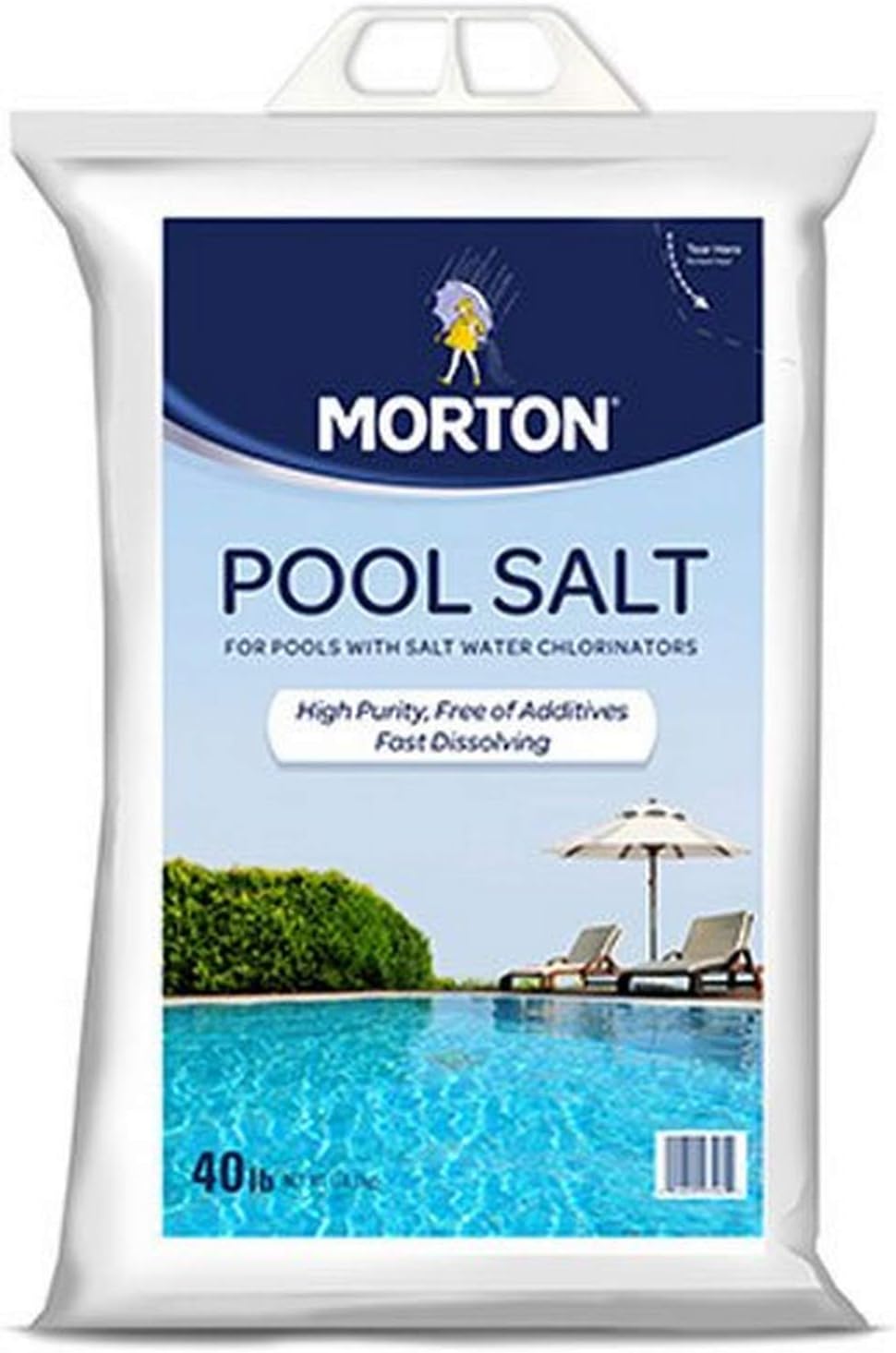
With a salt water chlorine generator (SWG), salt is the feedstock the cell converts into chlorine. Most cells run around 3,000 ppm (the unit manual gives the exact figure). Use 99.4%+ pure sodium chloride with no rust inhibitors or anti-caking additives. Some owners without a salt system add a lower dose (1,500–2,000 ppm) just for the softer water feel.
Best for: Anyone running a salt chlorine generator
Check price on Amazon →Understanding “shock” — it’s a process, not a product
“Shocking” means raising free chlorine to a high target and holding it until the water clears — you can shock with liquid chlorine, cal-hypo, or dichlor. TFP’s structured version is SLAM (Shock Level And Maintain): find the shock-level FC for your CYA, raise to it, and keep it topped up until algae is gone and the water passes an overnight chlorine-loss test. The source you pick changes the side effects.
8. Cal-Hypo Granular Shock — fast chlorine in bulk
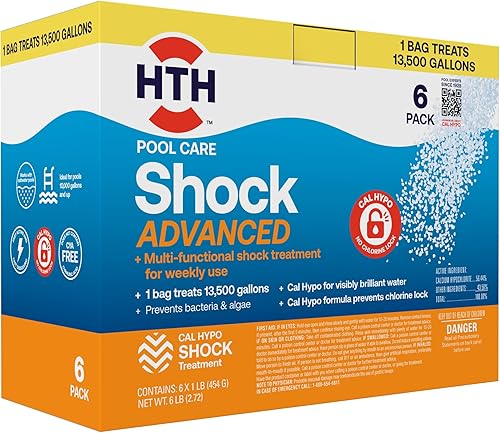
Calcium hypochlorite (65–73% available chlorine) raises chlorine quickly and is the most economical granular source — great for clearing a green pool or as a backup when liquid chlorine is not handy. It adds about 7 ppm of calcium per 10 ppm of chlorine, so it nudges hardness up over time (ideal for occasional use). Pre-dissolve and add at dusk so the sun does not burn it off. Safety note: never put it in a feeder that has held trichlor — the combination can ignite.
Best for: Clearing a green pool or bulk shocking
Check price on Amazon →9. Dichlor & Trichlor — convenient stabilized chlorine
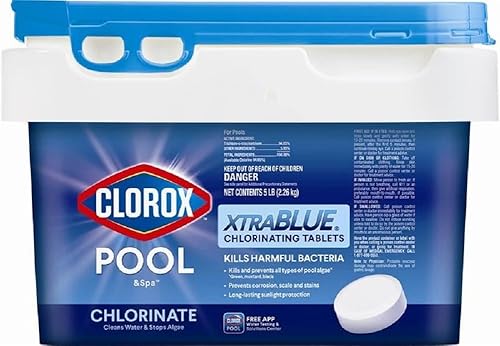
These are the granules (dichlor) and tablets (trichlor) that make chlorination nearly hands-off — trichlor pucks in a floater are a popular way to keep a pool going over a vacation. They are stabilized, so each dose also adds cyanuric acid: about 9 ppm CYA per 10 ppm chlorine for dichlor, about 6 ppm for trichlor (which is also mildly acidic). That makes them handy where you want to bring chlorine and CYA up together — a new fill, a hot tub, or topping off a low CYA reading.
Best for: Vacations, new fills, or raising CYA
Check price on Amazon →10. Non-Chlorine Shock (MPS) — an oxidizer for quick turnaround
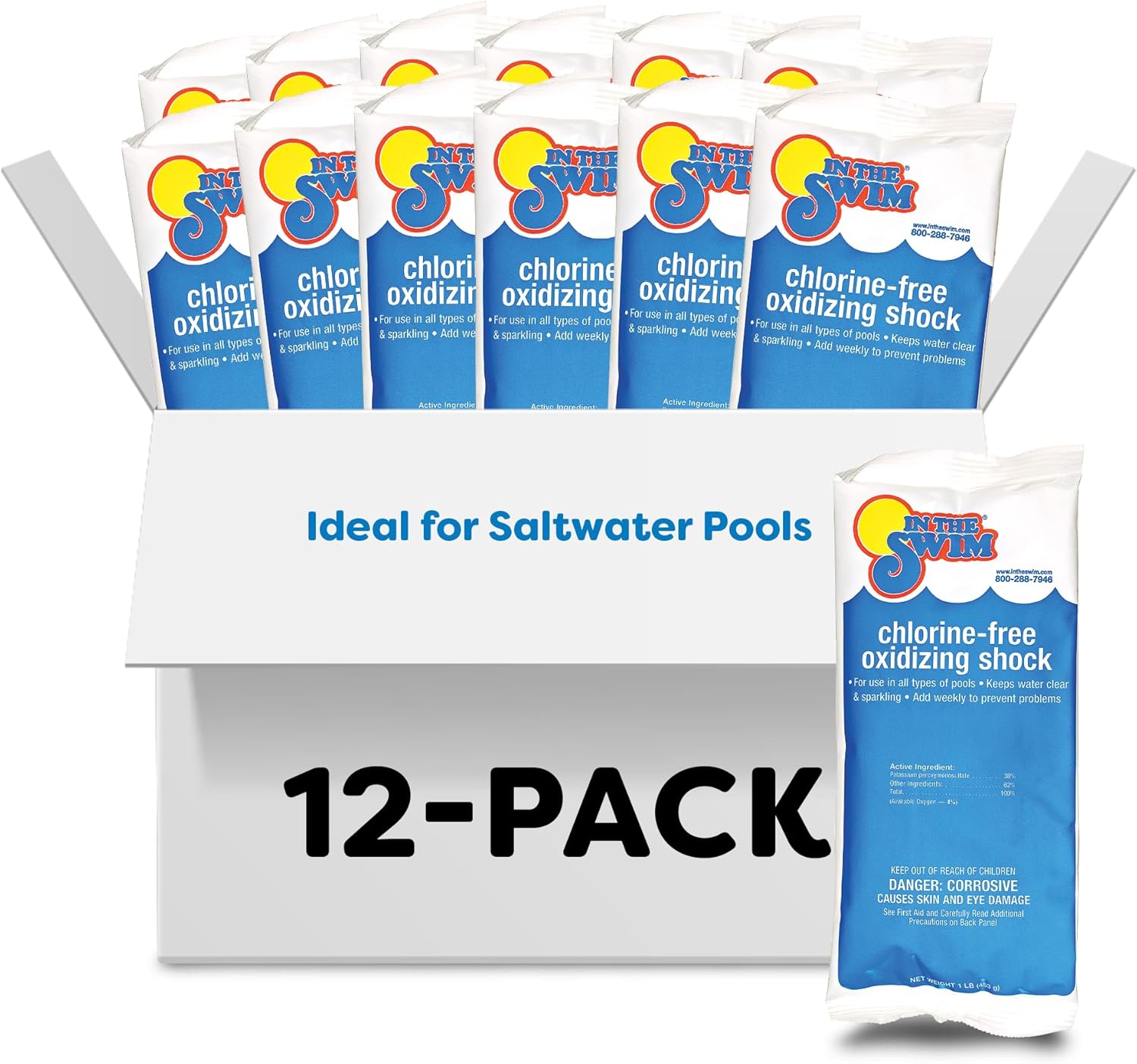
Potassium monopersulfate oxidizes organic load — sweat, oils, daily contaminant buildup — and clears chloramines, without adding CYA or calcium. Its big advantages: swimmers back in within about 15 minutes and far less chlorine smell, which is handy for indoor pools. It is an oxidizer, not a sanitizer, so it works alongside chlorine rather than replacing it. One quirk: it can read as combined chlorine on a DPD/FAS-DPD test unless you use a De-Ox reagent.
Best for: Quick oxidizing and indoor pools
Check price on Amazon →Problem-solvers (good to have on hand)
11. PolyQuat 60 Algaecide — dependable algae insurance
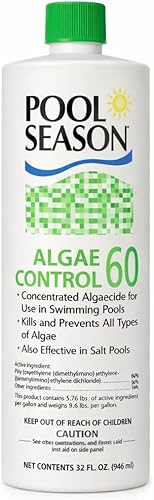
With chlorine kept in range, algaecide is rarely needed — but PolyQuat 60 is the one worth keeping around. It is non-foaming and copper-free, which makes it safe on any surface. It shines as insurance when closing the pool for winter or during a heat wave that is straining chlorine.
Best for: Winter closing and heat-wave insurance
Check price on Amazon →12. Metal Sequestrant — important for well-water pools
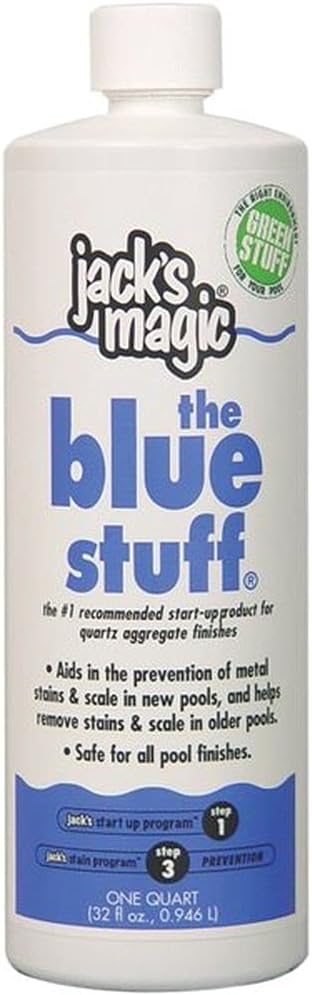
For anyone filling from a well or any source carrying iron, copper, or manganese, a sequestrant is genuinely valuable. It binds those metals and keeps them dissolved so they do not oxidize and stain surfaces when chlorine goes in. The routine is a dose on fill, then a maintenance dose every week or two. Pools on clean municipal water usually do not need it — a quick metals test at the start of the season tells you which applies.
Best for: Well water and metal-bearing fill water
Check price on Amazon →13. Ascorbic Acid — removes existing metal stains
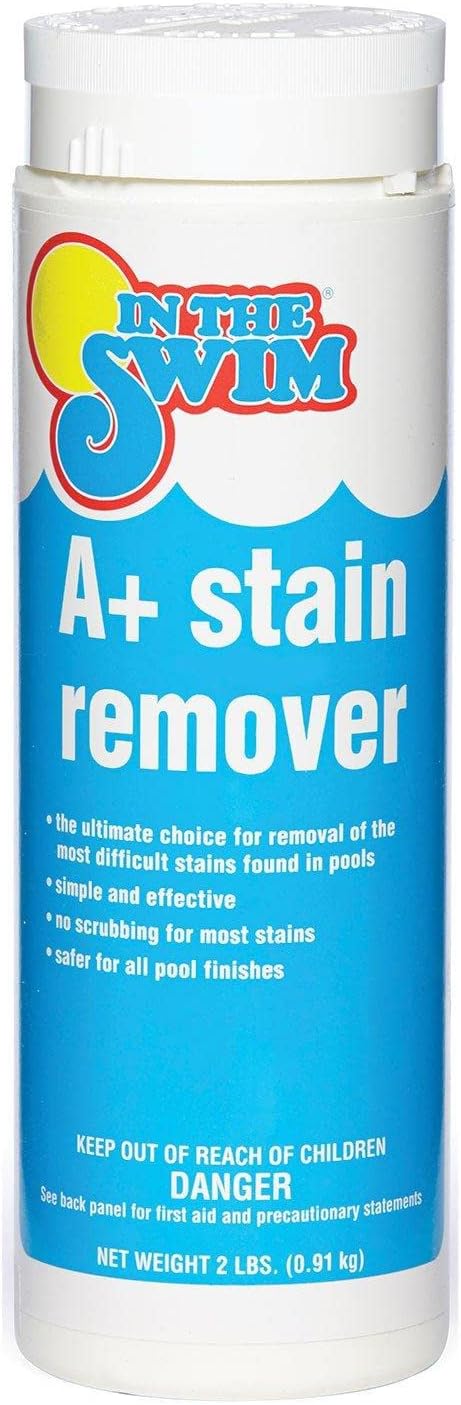
If iron has already left a reddish-brown stain on the plaster, ascorbic acid (vitamin C powder) is the standard fix. Lower chlorine to near zero, broadcast it around the pool, and brush — the stain usually lifts within hours. Follow up with a sequestrant to keep the metals from re-plating once chlorine comes back. It is inexpensive and far gentler than draining.
Best for: Lifting existing iron / metal stains
Check price on Amazon →14. Clarifier — polishes slightly hazy water
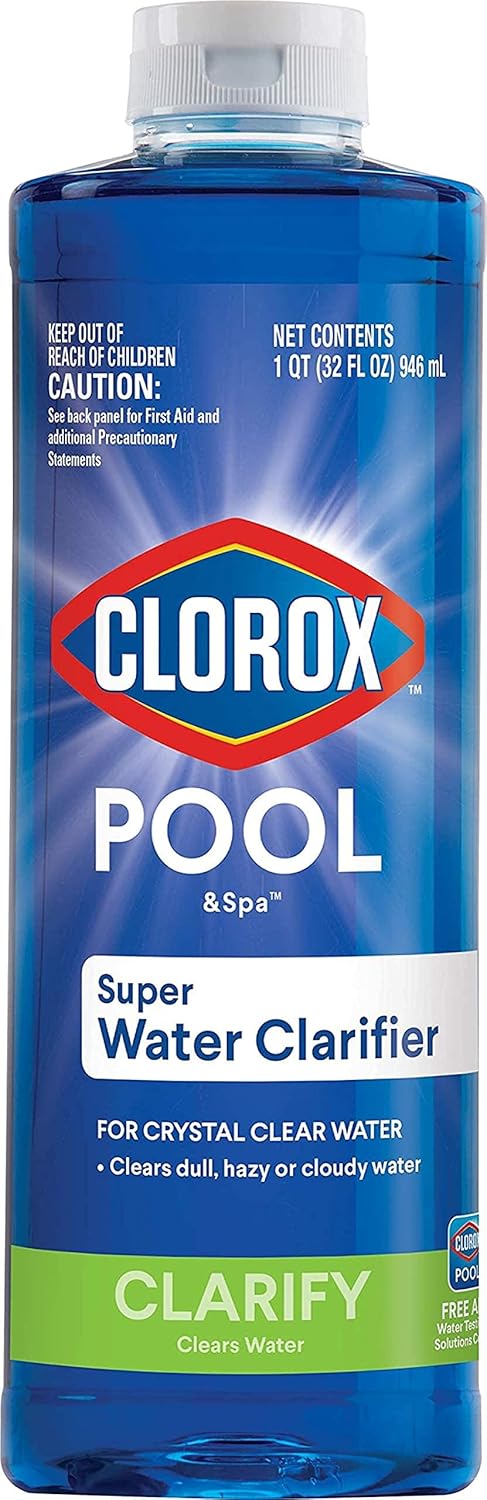
Clarifier gathers tiny suspended particles into larger clumps the filter can catch. It is a finishing touch rather than a fix — good filtration and balanced water do the heavy lifting — and it is handy after a shock or a heavy-use day when the water looks a touch cloudy.
Best for: Polishing slightly cloudy water
Check price on Amazon →15. Flocculant — for heavily clouded water
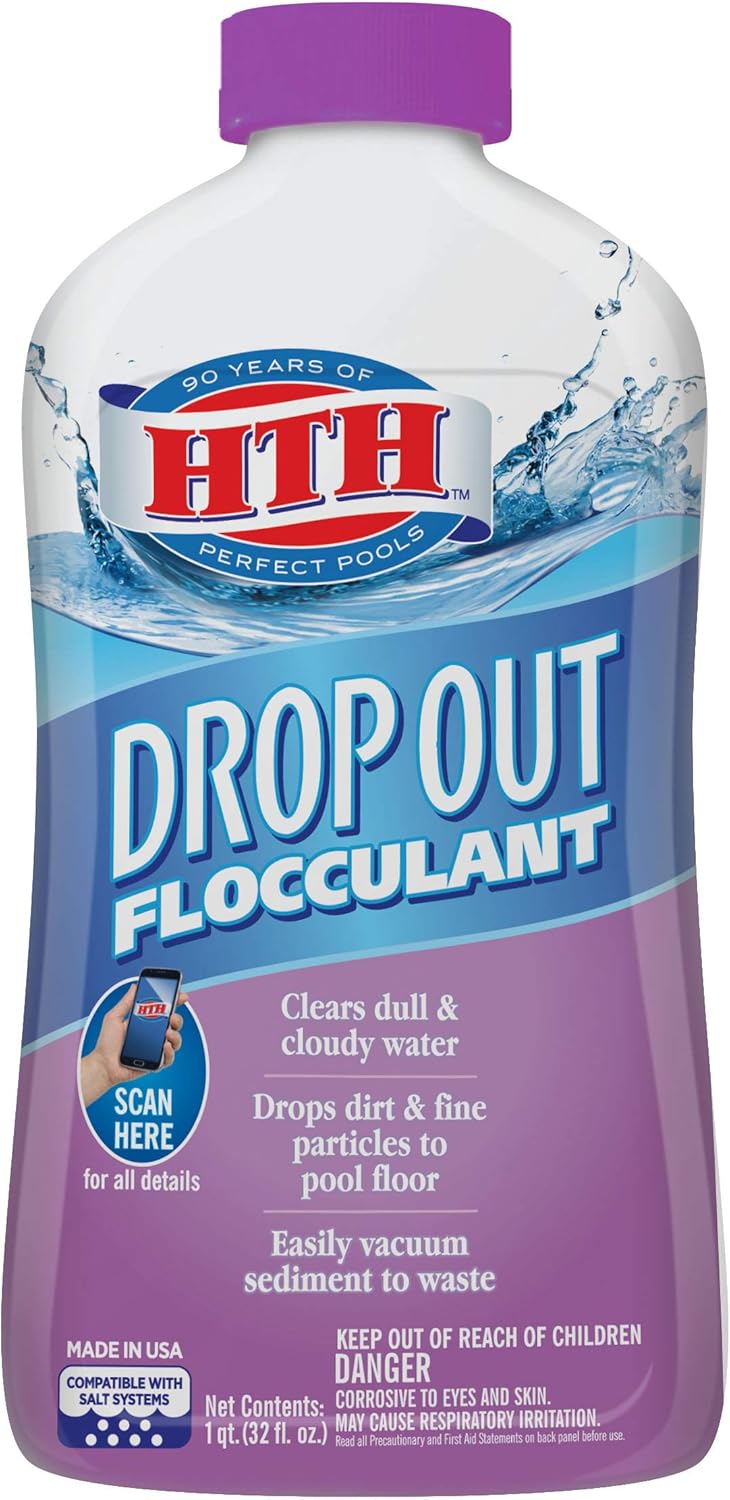
Floc drops suspended material into a layer on the floor that you then vacuum to waste, bypassing the filter. It takes some effort and uses water, so it is a clear-it-fast option for badly clouded pools — and when speed matters, little else clears water as quickly.
Best for: Clearing badly clouded water fast
Check price on Amazon →16. Filter Cleaner — keeps a cartridge or DE filter flowing
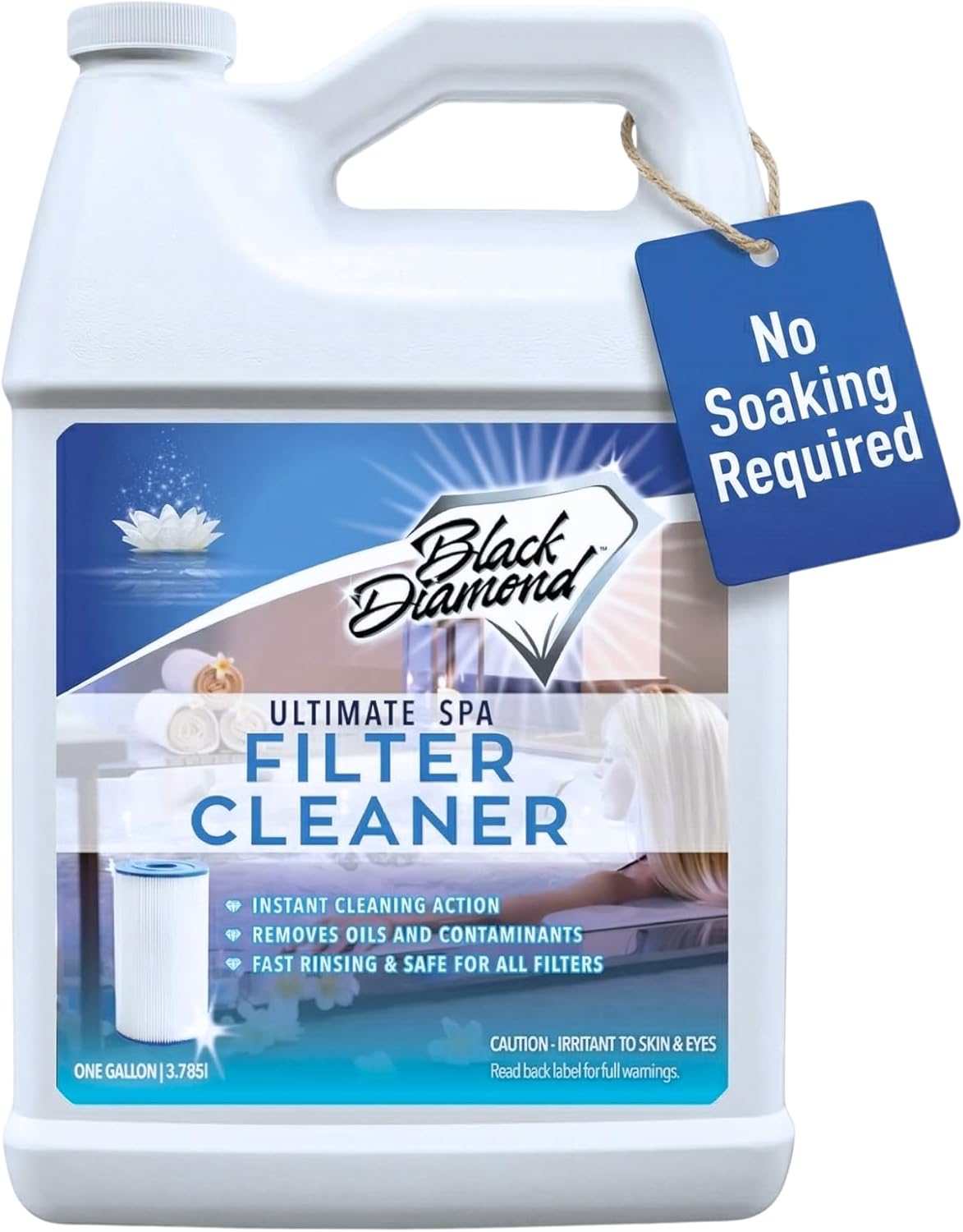
Cartridge and DE elements gradually load up with oils, scale, and fine debris that a quick rinse will not fully remove, and clean media keeps circulation and chemistry running smoothly. A dedicated filter cleaner, or an overnight soak in a diluted solution, restores flow and extends cartridge life. Sand filters do not use it, but it is a useful one to have for a cartridge setup.
Best for: Cartridge and DE filter owners
Check price on Amazon →Quick reference
| Chemical | What it does | How often |
|---|---|---|
| Liquid chlorine | Sanitizes the water | Daily to weekly |
| Muriatic acid | Lowers pH / alkalinity | As needed |
| Cyanuric acid | Protects chlorine from sun | Rarely |
| Baking soda | Raises total alkalinity | Occasionally |
| Borax | Raises pH (low TA impact) | As needed |
| Calcium chloride | Raises calcium hardness | Rarely (plaster) |
| Pool salt | Feeds a salt chlorine cell | SWG pools only |
| Cal-hypo shock | Fast, cheap chlorine in bulk | Algae / green pool |
| Dichlor / trichlor | Stabilized chlorine (adds CYA) | Vacation / new fill |
| Non-chlorine shock (MPS) | Oxidizes, swim again fast | Supplemental |
| PolyQuat 60 | Algae insurance | Closing / heat waves |
| Metal sequestrant | Keeps metals from staining | Well-water pools |
| Ascorbic acid | Removes existing metal stains | As needed |
| Clarifier | Polishes light haze | Occasionally |
| Flocculant | Drops heavy cloudiness | When needed |
| Filter cleaner | Restores cartridge/DE flow | Seasonally |
Target levels at a glance
| Reading | Liquid-chlorine pool | Salt (SWG) pool |
|---|---|---|
| Free chlorine | Scales with CYA (≈7.5% of CYA) | Scales with CYA (never below 5%) |
| pH | 7.4–7.8 | 7.4–7.8 (often lower to limit scale) |
| Total alkalinity | 50–90 ppm | 50–70 ppm |
| Cyanuric acid | 30–60 ppm | 60–90 ppm |
| Calcium hardness | 250–350 (plaster); low/none for vinyl | 350–550 (plaster) |
| Salt | n/a | ≈3,000 ppm (per cell manual) |
| Borates (optional) | 30–50 ppm | 30–50 ppm |
Bottom line
A couple of staples you use constantly (liquid chlorine and muriatic acid), a few balancers you set and mostly forget (CYA, baking soda, borax, calcium, and salt for a salt system), an understanding that “shock” means a strong dose of chlorine, and a small shelf of problem-solvers for the season’s surprises. Paired with a good drops-based test kit, that short list keeps the water clear all season.
This guide contains affiliate links. We may earn a small commission at no extra cost to you.