
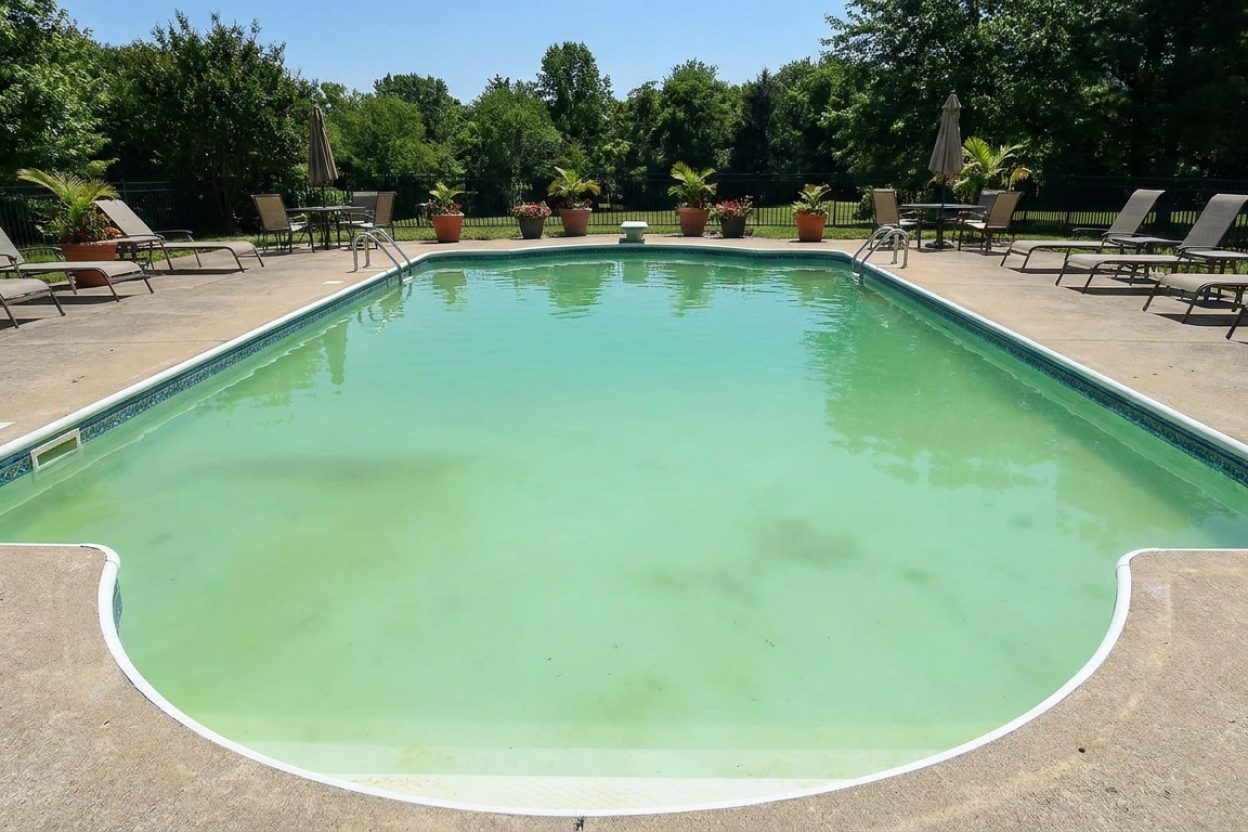
Can You Floc a Green Pool? Better Algae Treatment Methods

Should I use floc on my green pool or is there a better way?
Read full question
Since my pool guy insists I need expensive algaecide treatments to clear my green pool, I'm wondering if he's just trying to upsell me when flocculent might work. I've tried shocking it multiple times but the algae just won't die. Someone mentioned using flocculent to clear up the water, but I'm not sure if that's the right approach for a green pool.
I'm wondering if floc will actually help kill the algae or if I'm just wasting more money on chemicals. Is there a more effective method I should be using instead? I really need this thing crystal clear again before my family comes to visit.
Quick Answer
Yes, you can floc a green pool, but it's not recommended as the primary treatment. Flocculent will settle debris but won't kill algae - you still need to shock the pool first. The SLAM method is more effective for green pools.
Why Flocculent Isn't Your Best Option for Green Pools
Flocculent works by binding small particles together so they sink to the bottom where you can vacuum them out. However, a green pool means you have living algae actively reproducing in your water. Flocculent cannot kill algae - it can only help remove dead algae and debris after you've already killed the organisms with proper chlorination.
If you floc without shocking first, you're essentially just temporarily clearing the water while leaving the root cause untreated. The algae will quickly return, often within 24-48 hours, making your efforts largely wasted.
The Right Way: SLAM Method First, Floc if Needed
The most effective approach for a green pool is the SLAMShock Level And Maintain — raise free chlorine to a target based on your CYA and hold it there until the algae is gone. It's a process, not a one-time dose. the SLAM walkthrough → method - Shock Level And Maintain. This process kills all algae and bacteria, then keeps chlorine at shock level until your pool passes an overnight chlorine loss test.
Step 1: Test Your Water Chemistry
Before adding any chemicals, test your pool water for:
- Free Chlorine (FCFree Chlorine — The chlorine actively sanitizing your water right now. This is the number you keep an eye on. how much you need →)
- Combined Chlorine (CCCombined Chlorine — "Used-up" chlorine left over from doing its job. Above about 0.5 ppm is the classic sign water needs a shock. learn more →)
- pH level
- Cyanuric Acid (CYA/Stabilizer)
- Total Alkalinity (TATotal Alkalinity — The buffer that keeps your pH from bouncing around. Get this in range and pH gets a lot easier to manage. learn more →)
Use a quality test kit like the Taylor K-2006C for accurate readings. Pool store test strips are notoriously unreliable for this process.
Step 2: Balance pH First
Adjust your pH to 7.4-7.6 before shocking. If pH is too high, chlorine becomes much less effective at killing algae. Use our pH calculator to determine how much muriatic acid to add if you need to lower pH.
Step 3: Determine Your Shock Level
Your shock level depends on your CYACyanuric Acid (stabilizer) — Sunscreen for your chlorine — it keeps sunlight from burning it off. The catch: the more you have, the more chlorine you need to keep. learn more → level. Use our chlorine calculator for dosing estimates, or follow this FC/CYAFC/CYA chart — The chart that sets your chlorine target from your stabilizer (CYA) level — the two go together. see the chart → relationship:
- CYA 30: Shock level 12 ppm FC
- CYA 40: Shock level 16 ppm FC
- CYA 50: Shock level 20 ppm FC
- CYA 60: Shock level 24 ppm FC
- CYA 70: Shock level 28 ppm FC
- CYA 80: Shock level 31 ppm FC
If your CYA is above 80 ppm, you'll need to partially drain and refill your pool first, as chlorine becomes ineffective at very high stabilizer levels.
Step 4: Add Liquid Chlorine
Use liquid chlorine (sodium hypochlorite) rather than powder shock or tablets. Use our all-in-one pool calculator to size the dose needed to reach shock level for your CYA, and add it gradually around the pool perimeter with the pump running.
Step 5: Maintain Shock Level
Test FC levels twice daily and add more liquid chlorine to maintain shock level. Your pool will consume large amounts of chlorine initially as it kills algae. This is normal - keep adding chlorine to maintain your target level.
Do you need algaecide? No - to clear a green pool you don't need algaecide, and your hunch about the upsell is reasonable. Trouble Free Pool notes that chlorine (via SLAM) does the actual killing; algaecide is a preventive, not a bloom treatment, and won't take down an established bloom on its own. Save your money and let the chlorine work.
When to Consider Flocculent
After 2-3 days of SLAM, your water should start clearing but may remain cloudy with dead algae and debris. This is when flocculent can be helpful. Once you've killed the algae and your overnight FC loss is less than 1 ppm, you can add flocculent to speed up the clearing process.
Using Flocculent on a Treated Green Pool
- Ensure your FC level is at or near shock level
- Add liquid flocculent according to package directions (typically 1 quart per 20,000 gallons)
- Run your pump for 2 hours to circulate
- Turn off pump and let pool sit undisturbed for 8-24 hours
- Vacuum settled debris directly to waste, not through your filter (This needs a sand or DE filter with a multiport "waste" valve — cartridge filters have no waste setting, so with a cartridge you vacuum through the filter and then clean or replace it, or run a separate utility/manual pump that sends the water out of the pool.)
- Backwash or clean filter thoroughly
- Resume normal SLAM process until overnight FC loss is 1 ppm or less and combined chlorine (CC) is 0.5 ppm or less
Important Safety Warnings
Never mix chemicals directly. Add them separately with the pump running and wait at least 30 minutes between different chemical additions. Always add chemicals to water, never water to chemicals.
The real gas hazard with chlorine is mixing concentrated products together - never combine acid and chlorine. Adding liquid chlorine to the bulk pool with the pump running, ideally outdoors, does not produce dangerous chlorine gas.
Why This Method Works Better
The SLAM method addresses the root cause of green water - living algae - while flocculent only treats the symptoms. By killing all algae first, you prevent it from quickly returning. The flocculent then serves its proper role as a clarifier for dead organic matter, not as a primary treatment.
Most pool owners who try flocculent alone on green pools find themselves repeating the process multiple times, wasting time and money. The SLAM method, while requiring more initial chemical investment, typically clears a green pool permanently in 3-7 days.
Remember to continue testing and maintaining proper chlorine levels even after your pool clears to prevent future algae blooms.
For the full breakdown of safe chlorine levels by CYA level, see our pool water chemistry guide.
 Taylor K-2006C Complete FAS-DPD Pool & Spa Test Kit
The FAS-DPD kit pool pros trust — reads chlorine accurately even at shock/SLAM levels, plus pH, alkalinity, calcium hardness and CYA. View on Amazon →
Taylor K-2006C Complete FAS-DPD Pool & Spa Test Kit
The FAS-DPD kit pool pros trust — reads chlorine accurately even at shock/SLAM levels, plus pH, alkalinity, calcium hardness and CYA. View on Amazon →
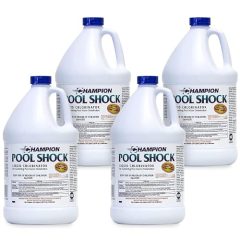 Liquid Chlorine / Sodium Hypochlorite (12.5%)
Everyday sanitizer — the B in BBB View on Amazon →
Liquid Chlorine / Sodium Hypochlorite (12.5%)
Everyday sanitizer — the B in BBB View on Amazon →
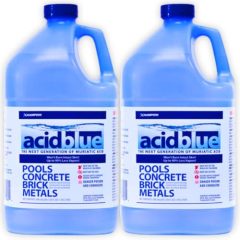 Acid Blue - Low Fume Muriatic Acid for Swimming Pools & Spas - Lower's pH, Reduces Alkalinity - 2 Gallon
View on Amazon →
Acid Blue - Low Fume Muriatic Acid for Swimming Pools & Spas - Lower's pH, Reduces Alkalinity - 2 Gallon
View on Amazon →
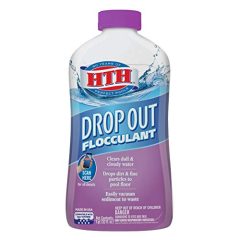 Pool Flocculant (Drop & Vacuum)
Drops debris to vacuum to waste View on Amazon →
Pool Flocculant (Drop & Vacuum)
Drops debris to vacuum to waste View on Amazon →
Still need help? Ask a Pool & Spa Expert AD
Get a personalized answer from PoolGuy810 — 30 years owning a pool and spa repair company. Describe your issue and get step-by-step help.
Related Pool Guides
Need More Help?
Try our free pool calculators and tools to help diagnose and fix your pool problems.
Browse Pool ToolsSLAM calculator, pH calculator, salt dosing & more