
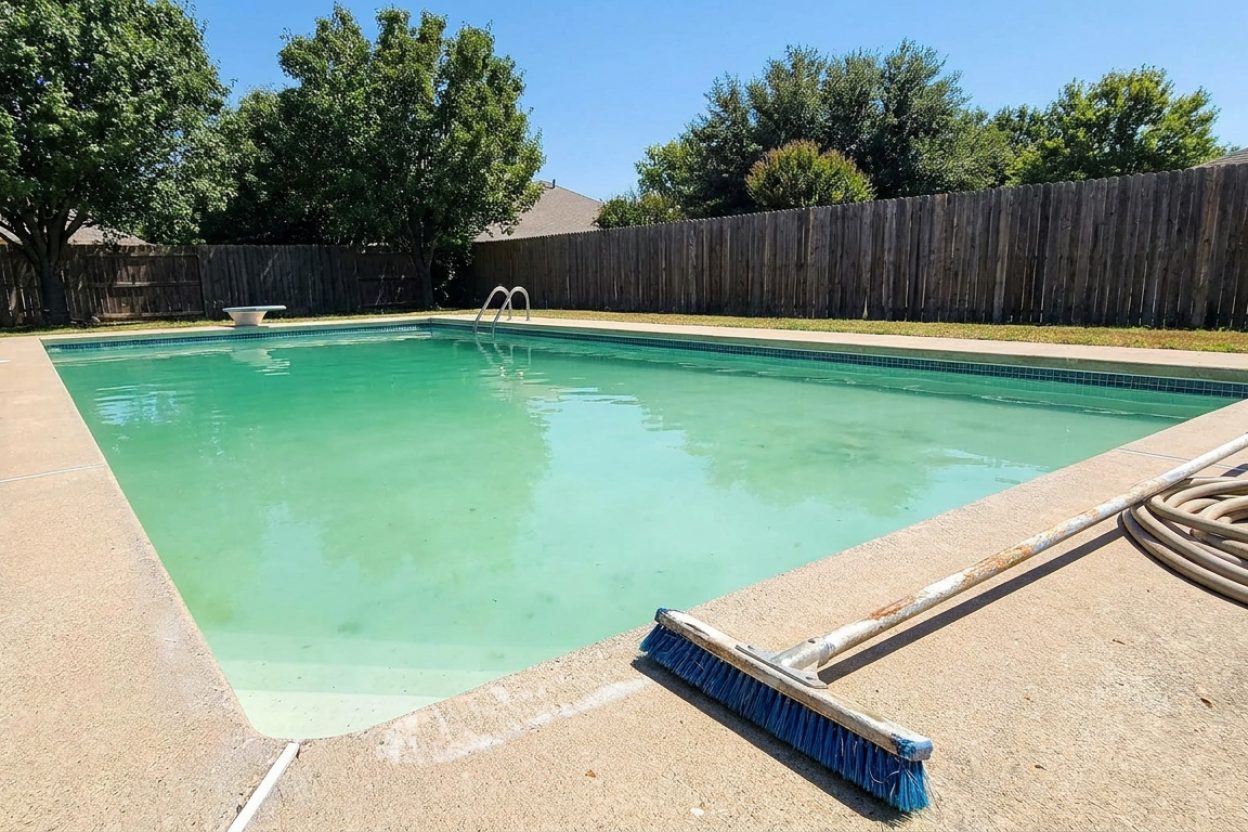
Can Pool Algae Be Brown? Types, ID & Treatment Guide

Is brown stuff in my pool actually algae or something else?
Read full question
According to my pool guy I've done everything right — shocked twice, scrubbed every surface, ran the pump nonstop — but this mysterious brown crud keeps coming back. I know green algae is the usual suspect, but this stuff is definitely more brown/yellowish. Is that even a thing with pool algae?
I'm trying to figure out if I need to shock it like regular algae or if there's some other treatment I should be doing. Don't want to waste a bunch of chemicals if I'm treating the wrong problem!
Quick Answer
Yes, pool algae can be brown. This typically indicates mustard algae (yellow-brown) or dead/dying green algae that has turned brownish. Treatment requires proper identification and targeted chlorine shock treatment.
Types of Brown Algae in Pools
Mustard Algae (Yellow-Brown Algae)
The most common cause of brown algae appearance is actually mustard algae, also commonly known as yellow algae. This stubborn organism appears yellow-brown to brownish-green and typically clings to pool walls, steps, and shaded areas. Mustard algae is chlorine-resistant and often mistaken for dirt or sand because it brushes off easily but returns quickly.
Mustard algae thrives in pools with inadequate chlorine levels relative to stabilizer (CYACyanuric Acid (stabilizer) — Sunscreen for your chlorine — it keeps sunlight from burning it off. The catch: the more you have, the more chlorine you need to keep. learn more →) levels. It's particularly common in warmer climates and can survive in properly chlorinated water if the free chlorine to CYA ratio isn't maintained correctly.
Dead Green Algae
Green algae that has been shocked with chlorine often turns brown or grayish-brown as it dies and oxidizes. This is actually a good sign that your shock treatment is working, but the dead algae needs to be filtered out completely to prevent it from becoming food for new algae growth.
True Brown Algae
Brown-colored biofilm or organic buildup is relatively rare in swimming pools but can occur, particularly in pools with high organic content or those that have been neglected for extended periods. This type appears as a brownish film or coating and is often accompanied by other contaminants.
Proper Identification Methods
Visual Inspection
Examine the algae's behavior and appearance closely. Mustard algae typically appears in patches on pool surfaces, especially in areas with less circulation. It brushes off easily with a pool brush but returns within 12-24 hours. True brown algae tends to form more of a coating or film.
Brush Test
Use a pool brush to disturb the brown material. If it creates a cloud that settles back down, you're likely dealing with mustard algae. If it comes off in sheets or films, it might be true brown algae or biofilm.
Water Testing
Test your water chemistry immediately using a quality test kit like the Taylor K-2006C. Focus on free chlorine (FCFree Chlorine — The chlorine actively sanitizing your water right now. This is the number you keep an eye on. how much you need →), combined chlorine (CCCombined Chlorine — "Used-up" chlorine left over from doing its job. Above about 0.5 ppm is the classic sign water needs a shock. learn more →), pH, total alkalinity (TATotal Alkalinity — The buffer that keeps your pH from bouncing around. Get this in range and pH gets a lot easier to manage. learn more →), and cyanuric acid (CYA) levels. Brown algae problems often correlate with improper FC/CYAFC/CYA chart — The chart that sets your chlorine target from your stabilizer (CYA) level — the two go together. see the chart → ratios.
Is It Actually Algae? (Pollen and Metal Stains)
Before treating, rule out the two most common look-alikes. Pollen is frequently mistaken for mustard algae: it settles only on the bottom of the pool (not the walls), appears everywhere rather than just on the shaded side, and unlike algae it keeps reaccumulating even when you hold shock-level chlorine. Metal staining (usually iron) shows up as brownish patches that won't brush off and don't respond to chlorine at all. The simplest discriminator: raise FC to shock level and brush — true mustard algae won't return as long as you stay at shock level, while pollen and metal stains will persist.
Treatment Protocol for Brown Algae
Step 1: Water Chemistry Assessment
Before adding any chemicals, get accurate readings of all chemical levels. For mustard algae treatment, you'll need to follow a modified SLAMShock Level And Maintain — raise free chlorine to a target based on your CYA and hold it there until the algae is gone. It's a process, not a one-time dose. the SLAM walkthrough → (Shock Level And Maintain) process that's more aggressive than standard green algae treatment.
Step 2: Brush Thoroughly
Brush all pool surfaces vigorously, paying special attention to areas where brown algae is visible. This step is crucial because mustard algae clings tightly to surfaces and must be disturbed to expose it to sanitizer.
Step 3: Shock Treatment
For mustard algae, first complete a normal SLAM at your standard shock level (40% of CYA — e.g., 20 ppm FC at CYA 50). Only after you've passed the SLAM, raise FC to the mustard-algae level of about 60% of CYA (30 ppm FC at CYA 50) and hold it for 24 hours. Use liquid chlorine (sodium hypochlorite) rather than calcium hypochlorite to avoid raising calcium hardness.
Dosing calculation: Each gallon of 12.5% liquid chlorine raises FC by approximately 12-13 ppm in 10,000 gallons of water. Adjust accordingly for your pool size.
Step 4: Maintain Shock Level
Unlike green algae treatment, mustard algae requires maintaining shock level for 24-48 hours minimum. Test FC every 8 hours and add more liquid chlorine to maintain your target level. The algae must be completely eliminated before reducing chlorine levels.
Step 5: pH Management
Liquid chlorine causes a temporary pH rise when added but is roughly pH-neutral over the full chlorine cycle; still monitor pH and adjust with muriatic acid to keep it around 7.4-7.6. High pH reduces chlorine effectiveness, making algae harder to kill.
Filtration and Cleaning
Continuous Filtration
Run your pool pump and filter 24/7 during treatment. Mustard algae and dead brown algae particles must be filtered out completely. Backwash or clean your filter when pressure rises 8-10 psi above starting pressure.
Equipment Sanitization
Mustard algae can survive on pool equipment and toys. Soak all pool accessories, including brushes, vacuum heads, and toys, in a 10% dilution of liquid chlorine (1 part liquid chlorine to 9 parts water) for several hours or overnight.
Filter Deep Clean
For persistent mustard algae, consider using a filter cleaner like Natural Chemistry Filter Perfect or soaking filter elements in a mild muriatic acid solution (1 part acid to 20 parts water) to remove algae residue.
Prevention Strategies
Maintain Proper FC/CYA Ratio
The key to preventing brown algae is maintaining adequate free chlorine relative to your stabilizer level. Use the FC/CYA relationship — our all-in-one pool calculator estimates the free chlorine target for your CYA. For 50 ppm CYA, maintain minimum 4 ppm FC daily, with 6 ppm preferred for mustard algae prevention.
Regular Brushing Schedule
Brush your pool weekly, focusing on areas with poor circulation. This prevents algae from establishing colonies on surfaces.
Keep FC at the Top of Its Range
In areas prone to mustard algae, routine weekly shocking isn't necessary. Instead, keep your daily free chlorine toward the high end of the target range for your CYA — this prevents algae from establishing in the first place without the wear of constant shocking.
When to Call a Professional
If brown algae persists after 72 hours of proper SLAM treatment, or if you're uncomfortable handling large quantities of liquid chlorine, contact a certified pool professional. Some cases may require specialized algaecides or equipment cleaning that's best handled professionally.
Remember, successful brown algae treatment requires patience and consistent chemical maintenance. The key is identifying the specific type of algae and following through with complete treatment rather than taking shortcuts that allow the problem to return.
For the full breakdown of safe chlorine levels by CYA level, see our pool water chemistry guide.
 Taylor K-2006C Complete FAS-DPD Pool & Spa Test Kit
The FAS-DPD kit pool pros trust — reads chlorine accurately even at shock/SLAM levels, plus pH, alkalinity, calcium hardness and CYA. View on Amazon →
Taylor K-2006C Complete FAS-DPD Pool & Spa Test Kit
The FAS-DPD kit pool pros trust — reads chlorine accurately even at shock/SLAM levels, plus pH, alkalinity, calcium hardness and CYA. View on Amazon →
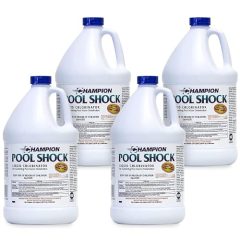 Liquid Chlorine / Sodium Hypochlorite (12.5%)
Everyday sanitizer — the B in BBB View on Amazon →
Liquid Chlorine / Sodium Hypochlorite (12.5%)
Everyday sanitizer — the B in BBB View on Amazon →
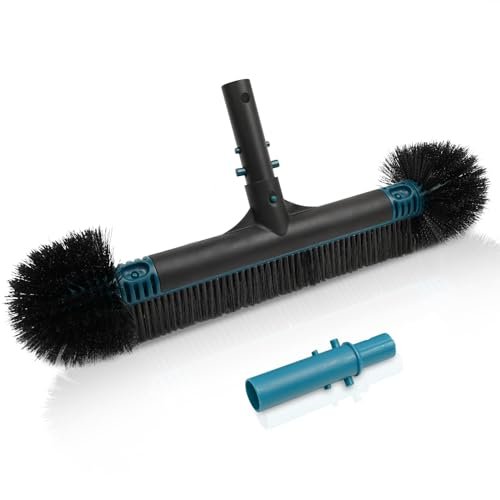 Poolvio 20" 2-in-1 Pool Brush Head (Walls & Floor)
Sturdy 20-inch brush head that clips onto any standard telescopic pole. View on Amazon →
Poolvio 20" 2-in-1 Pool Brush Head (Walls & Floor)
Sturdy 20-inch brush head that clips onto any standard telescopic pole. View on Amazon →
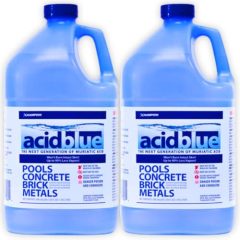 Acid Blue - Low Fume Muriatic Acid for Swimming Pools & Spas - Lower's pH, Reduces Alkalinity - 2 Gallon
View on Amazon →
Acid Blue - Low Fume Muriatic Acid for Swimming Pools & Spas - Lower's pH, Reduces Alkalinity - 2 Gallon
View on Amazon →
Still need help? Ask a Pool & Spa Expert AD
Get a personalized answer from PoolGuy810 — 30 years owning a pool and spa repair company. Describe your issue and get step-by-step help.
Related Pool Guides
Need More Help?
Try our free pool calculators and tools to help diagnose and fix your pool problems.
Browse Pool ToolsSLAM calculator, pH calculator, salt dosing & more